

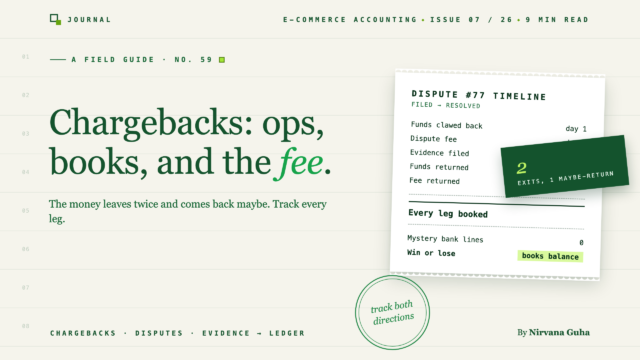
- 1Životní cyklus sporu: od dotazu po výsledek
- 2Mechanika peněz: Co odejde a co se může vrátit
- 3Účtování chargebacků: Zápisy pro ztrátu a výhru
- 4Zápis při přijetí sporu
- 5Pokud prohrajete
- 6Pokud vyhrajete
- 7Rezervy: Když spory začnou zadržovat vaše peníze
- 8Prevence: Levnější než výhra
- 9Kde se účty setkávají s výplatou
- 10Míra sporů je nyní číslo
Refundace je peníze, které jste vrátili. Chargeback je peníze, které byly vzaty. Vaše účetnictví musí znát rozdíl – protože peníze, poplatky a časový harmonogram se chovají jinak.
Předmět e-mailu je nějaká verze „Zákazník zpochybnil platbu.“ Otevřete ho a v jednom odstavci se dozvíte tři věci: objednávka z před pěti týdny je napadena, peníze už byly strženy z vaší příští výplaty a navíc je tam poplatek – účtovaný vám za výsadu, že jste byli napadeni.
O tomto zákazníkovi jste nikdy neslyšeli. Žádný lístek podpory, žádná žádost o vrácení peněz, nic. Bunda byla odeslána, sledování ukazuje doručení a nyní banka stáhla celou částku, zatímco vám byla dána lhůta a formulář k obhajobě vašeho případu.
Pokud vaším prvním instinktem bylo zaúčtovat to stejně jako refundaci – záporný prodej, jdeme dál – právě jste zaseli chybu v účetní shodě, která se objeví na konci měsíce. Protože intuice zde je specifická, běžná lež: „Chargeback je jen refundace, kterou si vynutil zákazník. Stejná věc, jinými dveřmi.“
Není. Refundace jsou peníze, které jste dobrovolně vrátili, ve vašem časovém rámci. Chargeback jsou peníze zabavené – stažené bankou zákazníka, než kdokoli slyšel vaši stranu, s přiloženým poplatkem a výsledkem neznámým po týdny. Nikdo neučí majitele obchodů účtování chargebacků, protože většina obchodů se se svým prvním sporem setká překvapeně. Tento příspěvek je kompletní verze: provozní životní cyklus, mechanika peněz a přesné zápisy pro oba výsledky.
Stránku refundací jsme pokryli v jak účtovat refundace a vrácení zboží. Tento příspěvek označil chargebacky jako jiný druh ve dvou odstavcích. Toto je kompletní anatomie.
Životní cyklus sporu: od dotazu po výsledek
Přesné obrazovky se liší podle procesoru, ale životní cyklus je všude stejný, protože je definován karetními sítěmi, nikoli Shopify, Stripe nebo PayPal. Čtyři fáze:
1. Dotaz (někdy). Některé spory začínají jako dotaz nebo žádost o vrácení peněz – banka žádá o informace před formálním zrušením čehokoli. Zatím se žádné peníze nepohybují. Odpovídejte rychle, protože dotaz, který vyřešíte, se nikdy nestane chargebackem. Ne každý spor vám dá tuto varovnou střelu; mnoho jich přeskočí rovnou na druhou fázi.
2. Zpětné zúčtování (chargeback). Banka zákazníka formálně zruší transakci. V tomto okamžiku dochází k pohybu peněz: z vašeho zůstatku u zpracovatele je okamžitě stažena sporná částka a spolu s ní je účtován poplatek za spor. Okamžitě přijdete o peníze bez ohledu na to, kdo má pravdu.
3. Důkazy (opětovné předložení). Dostanete lhůtu – obvykle několik týdnů, a termín je pevný – k předložení důkazů: podrobnosti objednávky, doklad o doručení, komunikace se zákazníkem, vaše zásady pro vrácení peněz, shoda IP a adresy. Pokud termín zmeškáte, prohrajete automaticky, bez ohledu na to, jak silný byl váš případ.
4. Výsledek. Banka rozhodne. Týdny později – často 60 až 75 dní po otevření sporu. Pokud vyhrajete, sporná částka se vám vrátí v budoucím vyplacení. Pokud prohrajete, nic dalšího se neděje; peníze, které odešly ve druhé fázi, jsou prostě pryč. V každém případě poplatek obvykle zůstává zaplacený – někteří zpracovatelé vám ho vrátí, když vyhrajete, a vaše smlouva je jediné místo, kde tato informace skutečně žije.
[OBRÁZEK: Časová osa čtyř fází sporu – dotaz, zpětné zúčtování, důkazy, výsledek – s ikonou peněz ukazující odliv peněz ve fázi 2 a podmíněný návrat ve fázi 4]
Detail, na kterém záleží pro vaše účetnictví: peníze odejdou ve druhé fázi, ale odpověď přijde ve čtvrté fázi. Tyto události mohou být v různých měsících. Zpětné zúčtování je otevřená otázka, která sedí ve vašich knihách týdny – což je přesně důvod, proč nemůže sdílet účet s vrácením peněz, kde příběh končí v okamžiku, kdy kliknete na tlačítko.
Mechanika peněz: Co odejde a co se může vrátit
Sledujte peníze oběma konci, obecně napříč zpracovateli:
- Když dojde ke zpětnému zúčtování: celá sporná částka (produkt, daň, doprava – vše, co zákazník zaplatil) je stažena z vašeho zůstatku k vyplacení, plus poplatek za spor, obvykle v rozmezí 15 $. Ve vašem výpisu o vyplacení se to objeví ve řádku úprav – ve stejném řádku, kde se obvykle rozchází vyrovnání výplat, protože výplata nesoucí zpětné zúčtování se nikdy nebude shodovat s "tržby mínus vrácení peněz mínus poplatky".
- Pokud prohrajete: žádný další pohyb. Odvod ve druhé fázi byl celou událostí.
- Pokud vyhrajete: sporná částka je znovu připsána v pozdější výplatě – často třetí výplatě, která nese část této jedné transakce, měsíce po původním prodeji. Poplatek se s ní může, ale nemusí vrátit, v závislosti na podmínkách vašeho zpracovatele.
Všimněte si, co se nikdy nestane: zboží se nevrátí. Při vrácení zboží dostanete bundu, kterou možná znovu prodáte. Při zpětném zúčtování si zákazník obvykle ponechá zboží a banka si vezme peníze. Tato asymetrie se projeví v níže uvedených záznamech.
Účtování chargebacků: Zápisy pro ztrátu a výhru
Čas na zcela fiktivní objednávku. V únoru si zákazník koupil bundu za celkem 180 $: 168 $ produkt, 12 $ daň z prodeje. Poplatek vašeho zpracovatele za prodej činil 5,40 $. Bunda vás stála 60 $, započítáno do COGS. V březnu zákazník zpochybní transakci. Banka stáhne 180 $ z vaší výplaty plus 15 $ poplatek za spor.
Nejprve struktura: vytvořte si vyhrazený účet pro vrácené platby jako protipoložku k tržbám ("Chargebacks" contra-revenue account), oddělený od "Refundace a vrácení", a nákladový účet pro "Poplatky za spory" (nebo jasně označenou položku pod poplatky obchodníka). To je celý trik. Refundace a vrácené platby v jednom balíku znamenají, že vaše míra refundací je znečištěná, vaše míra sporů je neviditelná a výhra nemá čistý účet, proti kterému by se dala zaúčtovat.
Zápis při přijetí sporu
Účtujte výběr hotovosti, když se peníze přesunou – nečekejte na výsledek:
| Část | Účet | Má dáti | Dal |
|---|---|---|---|
| Sporné tržby | Vrácené platby (protipoložka k tržbám) | $168.00 | |
| Daň z obratu | Daň z obratu k úhradě | $12.00 | |
| Výplata hotovosti | Zúčtovací účet platebního procesora | $180.00 | |
| Poplatek za spor | Poplatky za spory (náklady) | $15.00 | |
| Výplata hotovosti | Zúčtovací účet platebního procesora | $15.00 |
Tři věci, které je třeba poznamenat, všechny se liší od refundace:
- Žádná zásoba. Zákazník si bundu ponechal. Vašich 60 $ zůstává v nákladech na prodané zboží (COGS) – skutečné náklady na transakci, která vám nic nevydělala. (Při vrácení by se prodejná bunda těchto 60 $ obrátila. Zde žádná bunda není.)
- Vrátí se daň z prodeje. 12 $ bylo zabaveno spolu se vším ostatním, takže závazek zmizí z vašich knih. Pokud jste tuto daň již státu odvedli, její vrácení je otázkou daňového přiznání – stojí za poznámku vašemu CPA, spíše než improvizovaný záznam.
- Poplatek je nákladem v okamžiku jeho účtování. Ne pohledávkou, ne "čekající". Pokud vám jej váš zpracovatel při výhře vrátí, je to příjemný kredit později – nic, co by se dalo účtovat předem.
Jedno vylepšení pro puristy akruálního účetnictví: pokud jsou spory významné, můžete otevřené spory umístit na účet podobný pohledávkám "vrácené platby čekající" až do výsledku. Pro většinu obchodů je lepší jednoduchá metoda výše – odpovídá hotovosti a záznam o výhře níže ji čistě zruší. V obou případech si jednou vyberte a zůstaňte konzistentní.
Pokud prohrajete
Záznam jste již provedli. To je tichá brutalita jednoduché metody: prohra nevyžaduje žádné účetnictví. 168 $ sedí na vrácených platbách, 15 $ na poplatcích za spory, 60 $ v nákladech na prodané zboží a váš výkaz zisku a ztráty říká pravdu – tato objednávka vás stála 75 $ v reálných penězích plus 168 $ v obrácených tržbách a žádná bunda.
Pokud vyhrajete
V květnu banka rozhodne ve váš prospěch. 180 $ se objeví na výplatě. Záznam zrcadlí původní:
| Část | Účet | Má dáti | Dal |
|---|---|---|---|
| Příjem hotovosti | Zúčtovací účet platebního procesora | $180.00 | |
| Vrácené tržby | Vrácené platby (protipoložka k tržbám) | $168.00 | |
| Daň z obratu | Daň z obratu k úhradě | $12.00 |
Účet vrácených plateb se pro tuto objednávku vyrovná na nulu, daňový závazek je obnoven (opět jej dlužíte – prodej platí) a zúčtovací účet vysvětluje, proč květnová výplata je o 180 $ vyšší, než předpokládají květnové tržby. Pokud vám zpracovatel vrátil poplatek 15 $, připište jej na vrácené poplatky za spory; pokud ne, 15 $ zůstává trvalým nákladem na výhru.
To je celý oblouk: jeden únorový prodej, březnové zabavení, květnové vrácení – tři výplaty, tři měsíce, pět účetních dotyků. Nyní vynásobte každý spor a uvidíte, proč se "prostě zaúčtujte jako refundace" zhroutí.
Rezervy: Když spory začnou zadržovat vaše peníze
Pokud vaše míra sporů stoupne a zůstane vysoká, zpracovatelé reagují rezervním účtem: procento z příchozích tržeb držené stranou – postupně, po stanovený počet dní – jako polštář proti budoucím vráceným platbám. Podrobnosti se liší podle zpracovatele a dohody, ale účetní princip ne.
Rezervní zadržení nejsou nákladem. Peníze jsou stále vaše – jen se jich zatím nemůžete dotknout. Rezervy účtujte na vlastní účet aktiv (účet „procesorové rezervy“ nebo účet s omezenými prostředky, napájený z clearingového účtu) a uvolňujte je zpět, jak to dělá procesor. Pokud je budete považovat za náklad, podhodnotíte zisk; pokud je necháte nahromaděné na clearingovém účtu, dojde při každé výplatě k nesrovnalostem.
Rezerva je také zpráva. Což nás přivádí k provozní stránce.
Prevence: Levnější než výhra
Každý spor, který vyhrajete, vás stále stojí poplatek, hodiny práce s důkazy a týdny nejistoty. Lepší matematika spočívá v prevenci sporů a většina prevence spočívá v neokázalých operacích:
- Popisky fakturace. Značná část sporů je způsobena čistým zmatkem – zákazník vidí na svém výpisu jméno, které nepoznává. Zajistěte, aby váš popisek odpovídal značce, od které nakoupil.
- Doklad o doručení ve výchozím nastavení. Sledování všeho; potvrzení podpisu nad prahovou hodnotou, kterou si zvolíte. Spory typu „Produkt nebyl přijat“ na tom žijí a umírají.
- Odpovídejte na dotazy, jako by hořely. První fáze je jediná fáze, kde rychlá podpora může celou věc vyřešit, než se peníze pohnou.
- Vracejte peníze v hraničních případech. Vrácení peněz vás stojí poplatek za zpracování. Ztracený chargeback stojí stejné peníze plus 15 $, plus záznam o vaší míře sporů. Pokud je případ skutečně nejednoznačný, vrácení peněz je obvykle levnější řešení – další důvod, proč vrácení peněz a chargebacky potřebují samostatné účty: nemůžete porovnávat náklady, které nevidíte.
- Sledujte svou míru, nejen počet. Platební sítě a procesory provozují monitorovací programy, které se spustí při trvalé míře sporů – dodatečné poplatky, povinné plány snižování, rezervy a nakonec ukončení. Přesné prahové hodnoty jsou uvedeny ve vaší dohodě s procesorem, a tam je zkontrolujte; praktickým pravidlem je, že míra sporů rostoucí po několik po sobě jdoucích měsíců je provozním alarmem, nikoli účetní poznámkou pod čarou.
Váš dedikovaný účet Chargebacks umožňuje poslední bod. Pokud se spory skrývají uvnitř vrácení peněz, trend je neviditelný, dokud vám o tom procesor nepošle e-mail.
Kde se účty setkávají s výplatou
Vše výše uvedené lze provést ručně – položky nejsou složité. Trestající je, že přicházejí v rámci výplat, zamotané s prodeji, vrácením peněz a poplatky daného týdne, napříč třemi různými měsíci pro jedinou spornou objednávku.
Toto je území zúčtovacího účtu. Pokud je každá platba rozdělena na své složky — prodeje, vrácení peněz, poplatky, úpravy — než je porovnána s bankovním vkladem, chargeback je pouze označený řádek a celý postup je v naší příručce k vypořádání plateb ze Shopify v QuickBooks. Zde také synchronizační nástroj vydělá své peníze: LedgerPort publikuje účetní zápisy za každou platbu s již rozdělenými poplatky a vrácením peněz (účetní zápisy plateb jsou k dispozici v plánu Scale) a udržuje zúčtovací účet, přes který tyto zápisy procházejí — takže když platba dorazí o 195 $ méně, rozdíl je viditelná řádka úpravy, nikoli záhada, kterou reverzně analyzujete z CSV.
Jedna poctivá hranice: žádný účetní nástroj za vás neřeší spor. Důkazy, lhůty, oprava popisu, rozhodnutí, zda vrátit peníze předem — to je provoz a zůstává to vaše. Co dobrá struktura odstraňuje, je druhá katastrofa, kdy spor, který jste prohráli v březnu, stále narušuje vypořádání v červnu.
Míra sporů je nyní číslo
Zde je to, co se změní, když chargebacky dostanou vlastní účty: nic ohledně sporů, všechno ohledně vaší viditelnosti. Poplatky ve výši 15 $ se přestanou ztrácet v „poplatcích obchodníka, různé“. Výhry se skutečně obrátí místo dvojího započítání proti vrácení peněz. Rezervy se čtou jako držené hotovosti místo fantomových ztrát. A vaše míra sporů se stane řádkem ve zprávě, kterou kontrolujete měsíčně — stejná disciplína, která řídí zbytek vašeho účetnictví e-commerce.
Výše uvedená objednávka bundy se dotkla vašich knih pětkrát během tří měsíců. Pokud by váš současný systém zaznamenal jako „vrácení peněz, 180 $“ a pokračoval dál, struktura v tomto příspěvku je řešením — účet Chargebacks, řádek poplatku za spor a zúčtovací účet, který očekává úpravy. Začněte zdarma s LedgerPort a nechte stranu plateb účtovat se sama →