


- 1Önce Adil Olalım: A2X Neden Varsayılan Oldu
- 2A2X Alternatifleri, Duvara Göre Eşleştirildi
- 3Synder — birçok kanal ve işlem başına ayrıntı için
- 4Webgility — QuickBooks Desktop ve operasyonlar için
- 5MyWorks — WooCommerce derinliği için
- 6LedgerPort — ödeme odaklı defterler için sabit fiyatla (bizimki)
- 7Mağazalar İçin: Etikete Göre Değil, Gidişata Göre Seçim
- 8Muhasebe Firmaları İçin: Ekonomik Yapı Üründür
- 9A2X'te Kalmak da Bir Cevaptır
- 10Hangi A2X Alternatifi Hangi Duvara Uygun
- 11On Beş Dakikalık Test
Alternatifler daha az A2X değil. Onlar farklı şekiller — ve doğru olanı tamamen karşılaştığınız duvara bağlıdır.
Yenileme e-postası gelen kutunuzda duruyor. Ya da belki farklı bir an: firmanızla yeni bir WooCommerce müşterisi anlaştı ve orada olmayan A2X entegrasyonunu aramaya gittiniz. Ya da üçüncü mağazanızı açtıktan sonra fatura sayfanızı açtınız ve çarpma işlemini yaptınız.
Tetikleyici ne olursa olsun, şimdi A2X alternatiflerini arıyorsunuz — ve bu konuda biraz suçlu hissediyorsunuz. Çünkü A2X sizi hayal kırıklığına uğratmadı. Yevmiye kayıtları temiz bir şekilde gönderiliyor. Muhasebeciniz ona güveniyor. Tam olarak vaat ettiğini yapıyor.
Bu suçluluk belirli bir endişe yaratıyor ve bunu dile getirmeye değer: "Eğer A2X'ten ayrılırsam, doğruluktan tasarruf için vazgeçiyorum. Her alternatif bir adım aşağıdır."
Bu, bu yazının emekliye ayırmak için var olduğu yalandır. A2X'in ciddi alternatifleri indirimli taklitler değil — farklı yerçekimi merkezleri etrafında inşa edilmiş farklı araçlardır. Her biri belirli bir duvar için *doğru* cevap ve diğerleri için *yanlış* cevaptır. Önce duvarınızı adlandırın, gerisi çoğunlukla kendiliğinden halledilir.
(Önceden açıklama: aşağıdaki dört araçtan birini biz yapıyoruz. LedgerPort bizimki. Ne zaman yanlış bir seçim olduğunu, tam muhasebe yazılımı özetimizde yaptığımız gibi tam olarak anlatacağız.)
Önce Adil Olalım: A2X Neden Varsayılan Oldu
A2X konumunu hak etti. E-ticaret ödemelerini, kategorideki neredeyse herkesten daha uzun süredir düzenli, özetlenmiş yevmiye kayıtlarına çeviriyor. Doğruluk itibarı güçlü, pazar kapsamı — özellikle Amazon — gerçek bir farklılaştırıcı ve muhasebecilerin birbirlerine tavsiye ettiği isim. Eğer daha derin ürün bazında görünümü istiyorsanız, A2X incelememiz bunu ayrıntılı olarak ele alıyor.
Kimse A2X'i bozuk olduğu için bırakmaz. İnsanlar üç duvardan birine çarptıkları için bırakırlar:
Duvar 1: Fatura başarınızla birlikte artar. A2X, sipariş hacmi katmanlarına göre fiyatlandırılır, bu nedenle büyüme sizi merdivende yukarı taşır. Ayda 500 siparişte bir şey olan araç, 3.000 siparişte başka bir şey olur — mevcut fiyatlandırmalarını kontrol edin ve bunu bu yılın değil, *gelecek* yılın hacminde modelleyin. Bazı mağazalar için bu matematik uygun kalır. Diğerleri için, yenileme e-postası modelin uymadığı andır.
Duvar 2: WooCommerce menüde yok. A2X, Shopify ve pazar yeri kanalları etrafında inşa edilmiştir. Bir Woo mağazası eklediyseniz — veya yeni bir Woo müşterisiyle anlaşmış bir firmasınız — daha iyi bir A2X aramıyorsunuz, A2X'in hiç sunmadığı bir kapsama alanı arıyorsunuz.
Duvar 3: Firmalar aboneliklerin biriktiğini görüyor. A2X'in modeli kanal ve müşteri başına ölçeklenir. On beş e-ticaret müşterisini yöneten bir firma için, bu on beş ayrı satır öğesinin yukarı doğru ilerlemesi anlamına gelir — her biri bireysel olarak makul, toplu olarak her sözleşmede bir marj sorunudur.
Bu üçünden hiçbiri sizi tanımlamıyorsa, "A2X'te kalmak da bir cevaptır." bölümüne atlayın. Cidden. Diğer herkes için, zamanınıza değecek dört alternatif ve her birinin aslında çözdüğü duvar aşağıdadır.
A2X Alternatifleri, Duvara Göre Eşleştirildi
Synder — birçok kanal ve işlem başına ayrıntı için
Synder'ın gücü genişliğidir. Uzun bir satış kanalları ve ödeme işlemcileri listesini bağlar ve özet ödemeler yerine bireysel işlem düzeyinde senkronize olabilir. Geliriniz gerçekten Shopify artı pazar yerleri artı bir Stripe ürünü artı başka bir şey içeriyorsa, Synder hepsini tek bir deftere çeker — istediğinizde A2X'in özet giriş yaklaşımından daha fazla ayrıntıyla.
Çözdüğü duvar: A2X'in kapsamını bile aşan kanal yayılması veya işlem düzeyinde kayıtlara yönelik gerçek bir ihtiyaç.
Yanlış seçim eğer: kur ve unut istiyorsanız. Hacimli işlem başına senkronizasyon, QuickBooks'e akan binlerce giriş anlamına gelir ve her yapılandırma seçeneği yanlış yapabileceğiniz bir seçenektir. Synder sürekli denetim gerektirir. Senkronizasyon katmanınıza harcanan dikkati azaltmak için A2X'ten ayrılıyorsanız, bu yanlış yöndür.
Webgility — QuickBooks Desktop ve operasyonlar için
Webgility en çok bir kitle için önemlidir: QuickBooks Online yerine QuickBooks Desktop kullanan işletmeler. Masaüstünü iyi destekleyen birkaç ciddi araçtan biridir ve muhasebe işlemlerinin ötesine geçerek envanter ve sipariş yönetimine kadar uzanır — bir senkronizasyon katmanından çok bir operasyon platformuna daha yakındır.
Çözdüğü duvar: Masaüstü, nokta. Ayrıca birkaç işi yapan daha ağır bir sistem isteyen işletmelere de uygundur.
Yanlış seçim eğer: gerçek sorununuz "ödeme özetleri QBO'da mutabık kalmıyor." ise. O zaman Webgility iş için çok büyük bir makinedir — ödeme çeviri araçlarından (mevcut fiyatlarını kontrol edin) daha büyük bir uygulama ve daha yüksek bir fiyat noktası bekleyin. A2X'in muhasebeci dostu odağını, yüzde on kullanacağınız bir operasyon süiti için terk etmek, yaygın bir pişmanlık yoludur.
MyWorks — WooCommerce derinliği için
MyWorks, itibarını WooCommerce üzerine inşa etti ve Woo veri modelini herkes kadar iyi biliyor. Granüler alan düzeyinde eşleme, gerçek zamanlı senkronizasyon seçenekleri, siparişlerin, müşterilerin ve envanterin QuickBooks'e nasıl aktığına dair derin kontrol. Duvar 2'ye çarptıysanız ve işletmeniz öncelikli olarak Woo ise ve öyle kalacaksa, MyWorks uzman çözümdür.
Çözdüğü duvar: WooCommerce kapsamı, maksimum yapılandırılabilirlik ile.
Yanlış seçim çünkü: Shopify ana platformunuzsa (veya öyleyse) - en az ihtiyaç duyduğunuz yerde derinlik satın almış olursunuz. Ve Synder ile aynı denetim uyarısı geçerlidir: ayrıntı düzeyinde senkronizasyon, daha fazla eşleme kararı ve küçük bir yanlış yapılandırmanın sessizce katlanabileceği daha fazla yer anlamına gelir.
LedgerPort — ödeme odaklı defterler için sabit fiyatla (bizimki)
Bu bizim ürünümüz, bu yüzden uygun indirimi uygulayın - ama işte doğrudan sürüm ve üç duvara da uyuyor.
LedgerPort tek bir iş yapar: bankanıza ulaşan ödemeyi QuickBooks Online ile eşleştirmek. Mevduattan başlar ve geriye doğru çalışır, brüt satışları, iadeleri, ücretleri ve ayarlamaları otomatik olarak doğru hesaplara ayırır. Duvarlara doğrudan yanıt verdiği yerler:
- Duvar 1 (toplu maliyet): fiyatlandırma sipariş başına artan değil, sabit katmanlıdır. Ayda 30 siparişe kadar ücretsiz plan vardır; ücretli planlar ayda 25 ABD dolarından başlayan ve ayda 1.000 siparişe kadar 25 ABD doları ve gerçek zamanlı senkronizasyon ve ödeme günlükleri ile 5.000 siparişe kadar ayda 67 ABD doları ile başlar. Fatura, katmanınız içinde gönderdiğiniz her siparişle artmaz.
- Duvar 2 (WooCommerce): Shopify (Plus dahil) ve WooCommerce yereldir. Woo tarafı, bir CSV köprüsü değil, webhook tarafından yönlendirilen gerçek zamanlı senkronizasyona sahip gerçek bir WordPress eklentisidir.
- Duvar 3 (firma yığınlama): tek bir oturum açma altında birden fazla izole işletme, tek fatura - aşağıda firmalar bölümünde daha fazla bilgi.
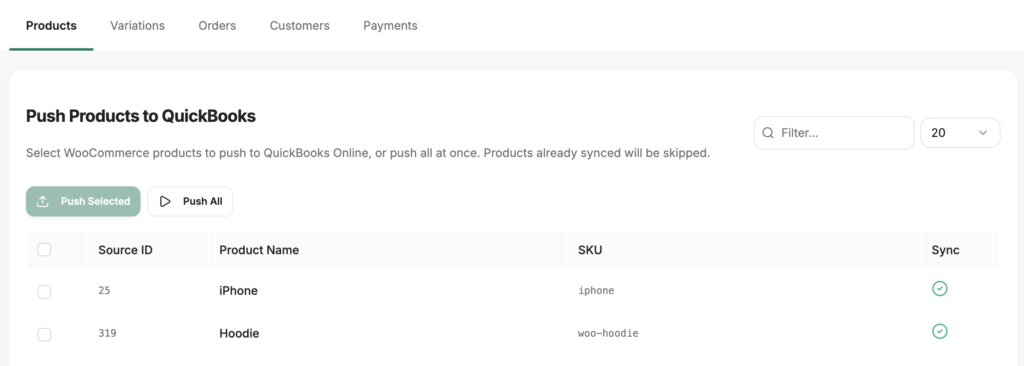
Gösterilmeye değer tek bir geçişle ilgili ayrıntı, çünkü her geçiş yapanın sorduğu ilk sorudur: bağlanmadan önceki aylarca süren veriler ne olacak? LedgerPort tam olarak bunun için isteğe bağlı bir gönderme özelliğine sahiptir. Woo tarafında bu, Send to QuickBooks sayfasıdır - ürünler, varyasyonlar, siparişler, müşteriler ve ödemeler, her biri seçici olarak veya toplu olarak gönderilir, zaten senkronize edilmiş kayıtlar otomatik olarak atlanır, böylece yeniden gönderme asla yinelenenler oluşturmaz.
Yanlış seçim çünkü: pazar yerleri gelirinizin ciddi bir bölümünü oluşturuyor. LedgerPort Amazon veya eBay'i kapsamaz - eğer karışımınız buysa, A2X veya Synder doğru seçimdir ve bunu ikinci haftada keşfetmenizden daha iyidir. Ayrıca bu listedeki en yeni araçtır, bu da A2X'in yıllarca süren muhasebeci güvenine kıyasla daha kısa bir geçmişe sahip olduğu anlamına gelir. LedgerPort - A2X Karşılaştırması karşılaştırmayı satır satır inceler.
Mağazalar İçin: Etikete Göre Değil, Gidişata Göre Seçim
Bir mağaza işletiyorsanız, duvarınız neredeyse her zaman 1 veya 2'dir ve karar iki soruya iner.
On iki ay sonra sipariş hacminiz nerede olacak? Her adayı - A2X ve bizi de dahil ederek - bugünkü değil, o sayı üzerinden fiyatlandırın. Sipariş başına ve hacim kademeli modeller, tam olarak mağazanız en küçük olduğunda en ucuz görünür, ki bu karşılaştırmanın en az önemli olduğu andır. Sabit kademe bir model 300 siparişte sıkıcı görünür ve 3.000 siparişte çok farklı görünür.
Hangi platformlarda olacaksınız? Cevap WooCommerce'i içeriyorsa, kısa listeniz MyWorks (yalnızca Woo, maksimum derinlik) veya LedgerPort (tek çatı altında Shopify + Woo) olur. Cevap Amazon'u içeriyorsa, kısa listeniz A2X veya Synder olur ve belki de hiç ayrılmayacaksınız.
Ve geçiş maliyetini dürüstçe tartın: herhangi bir geçiş, yeniden bağlanmayı, hesap planınızı yeniden eşleştirmeyi ve ilk birkaç ödemeyi bankayla doğrulamayı gerektirir. Ödeme odaklı bir araçla bu bir öğleden sonra sürer, bir çeyrek değil - ancak sıfır değildir ve zaten yapılandırdığınız bir aracın gerçek bir yerleşik değeri vardır. Daha geniş kategori mantığı, hala kararı çerçeveliyorsanız e-ticaret muhasebe yazılımı kılavuzumuzda yer almaktadır.
Muhasebe Firmaları İçin: Ekonomik Yapı Üründür
Eğer bir firmasınızsa, Wall 3 ne aradığınızı değiştirir. Bir mağaza sahibi özellikleri karşılaştırır; bir firma müşteri başına birim ekonomisini karşılaştırır. Müşteri başına aboneliklerdeki on beş müşteri, her biri sipariş hacmiyle ölçeklenir, bu da yazılım maliyetinizin, en çok en üst düzeye çıkarmaya çalıştığınız iki şeyin tam olarak büyümesi anlamına gelir.
İşte LedgerPort'un yapısının gerçekten farklı olduğu, aşamalı olarak daha ucuz olmaktan ziyade. Organizasyon birimi İşletme'dir: tek bir QuickBooks şirketiyle eşleştirilmiş tek bir mağaza, tamamen izole edilmiş - kendi bağlantıları, eşlemeleri, para birimi, saat dilimi ve senkronizasyon geçmişi - her işletme tek bir firma girişi altında yaşar. İşletme kotaları, sınırsıza kadar plan kademesine göre ölçeklenir, böylece on altıncı müşteri, muhasebenizde yeni bir abonelik değil, değiştiricinizde yeni bir giriş olur.
Bu yapının üzerine resmi bir CPA ortak programı oturur: tek bir kontrol panelinden hiyerarşik müşteri yönetimi, firma düzeyinde toplu faturalama ve yönlendirilen müşterilerde %20 gelir paylaşımı veya onlara aktarılan %20 indirim arasında bir seçim. Bir Ana Şablon, her etkileşim, müşteri başına eşlemeleri yeniden oluşturmak yerine her müşteri arasında tek bir standartlaştırılmış hesap planı yapılandırması uygular, müşteri tarafı portalları firmanızın markasına göre beyaz etiketlenebilir ve geçmiş içe aktarmaları, kayıtlarında temizlik gerektiren bir müşteri aldığınızda defterleri yeniden oluşturmayı destekler.
Dürüst uyarı burada da geçerlidir: A2X'in muhasebeci odaklı tasarımı, tam da bu yüzden muhasebecilerin onu sevmesini sağlıyor ve müşterilerinin çoğu Amazon satıcısı olan bir firmanın ayrılması için hiçbir neden yok. Geçişin mantıklı olduğu firmalar, Shopify ve WooCommerce mağazalarının QuickBooks Online'da olduğu firmalardır; burada müşteri başına maliyet tamamen ek yüktür ve pazar yeri kapsamı kullanılmaz.
A2X'te Kalmak da Bir Cevaptır
Üç duvarı gerçek durumunuza göre değerlendirin:
- Hacminiz istikrarlı ve mevcut katman fiyatı aldıklarınız için makul.
- Kanallarınız Shopify ve Amazon; planda WooCommerce yok.
- Tek bir mağazanız var veya müşteri başına maliyetinizin zaten sabit ücretlere dahil edildiği bir firmasınız.
Eğer durumunuz buysa, bir duvarınız yok; bir yenileme e-postanız ve bir merak anınız var. Çalışan, muhasebecinizin güvendiği ve tuhaflıklarını zaten bildiğiniz bir araçla kalmak mükemmel bir karardır. Küçük olsalar bile geçiş maliyetleri gerçektir ve "aylık kapanışlar sorunsuz yapılıyor" çözümü aranan bir sorun değildir.
Karşılaştırmayı bir duvarın gerçekten göründüğü güne saklayın. Bu bir satış tavizi değil; bu yazının tüm argümanı budur. Alternatifler belirli duvarlara verilen yanıtlardır; duvar yoksa soru da yoktur.
Hangi A2X Alternatifi Hangi Duvara Uygun
| Duvarınız | Bir mağazasınız | Bir firmasınız |
|---|---|---|
| Fatura, sipariş hacmiyle birlikte ölçeklenir | LedgerPort — ayda 25 dolardan başlayan sabit katmanlar, 30 siparişin altında ücretsiz plan | LedgerPort iş ortağı programı — tek giriş, toplu faturalama |
| WooCommerce kapsamı gerekiyor | MyWorks (Yalnızca Woo, en derin kontrol) veya LedgerPort (Shopify + Woo birlikte) | LedgerPort — Woo ve Shopify müşterileri izole edilmiş işletmeler olarak |
| Müşteri başına aboneliklerin birikmesi | — | LedgerPort — işletmeler sınırsıza kadar katman atlayarak ölçeklenir, ayrıca iş ortağı programı |
| A2X'in listesinin ötesinde kanal yayılımı | Synder — genişlik ve işlem başına ayrıntı | Synder, eğer yapılandırmayı siz üstlenirseniz |
| QuickBooks Masaüstü | Webgility — ciddi Masaüstü seçeneği | Webgility |
| Hiç duvar yok | A2X'te kalın | A2X'te kalın |
Her satır için tek bir kural geçerlidir: her satıcının sitesindeki güncel fiyatları kontrol edin — bizimkiler dahil — çünkü yayınlanan rakamlar hızla eskir ve gelecek yılın hacmine göre maliyetleri modelleyin.
On Beş Dakikalık Test
A2X'ten ayrılmanın doğruluğu feda edip tasarruf etmek anlamına geldiği endişesiyle geldiniz. Gerçek daha az dramatik: bu araçlar arasında değişen şey doğruluk değil, *şekildir*. Pazar yeri genişliği, Woo derinliği, Masaüstü desteği, çoklu işletme yapısıyla sabit fiyatlandırma. Bunları sıralamazsınız; duvarınıza uyarsınız.
Duvarınız LedgerPort'un üç yanıtından biri ise — ölçeklenen fatura, WooCommerce boşluğu, biriken müşteri abonelikleri — test hiçbir şeye mal olmaz ve öğle arasına sığar: ücretsiz plana bir mağaza bağlayın, gerçek bir ödemeyi senkronize edin ve banka dekontuyla karşılaştırın. Bu, endişelendiğiniz doğruluk sorusudur ve herhangi birinin pazarlaması yerine kendi verilerinizle yanıtlanmıştır.
Ücretsiz başlayın ve ilk ödemenizi mutabakat yapın →
Hala karşılaştırıyor musunuz? LedgerPort - A2X karşılaştırması doğrudan eşleşmeyi ele alıyor, A2X incelememiz A2X'e tam hakkını veriyor ve tam beş araçlı genel bakış kategoriyi baştan sona kapsıyor.