

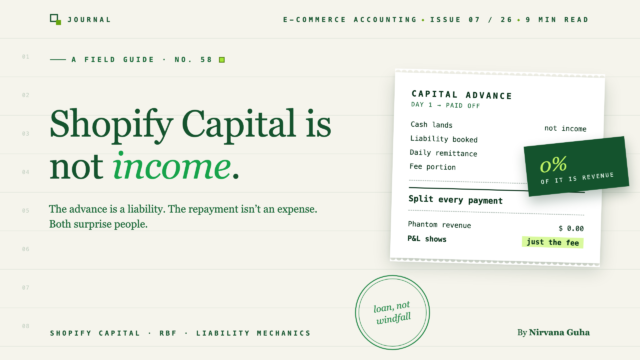
- 1Avans Bir Yükümlülüktür, Harika Bir Ay Değil
- 2Nereye Geri Gidiyor: Havaleler Ödemelerinizin İçinde Gizlenir
- 3Tuzak: Net Mevduat Kayıtları Satışların Düştüğü İzlenimini Verir
- 4QuickBooks Online'da Shopify Capital Muhasebesi: Uygulamalı Örnek
- 5Bu Durum Kâr Marjlarınıza ve Satışınıza Ne Yapar?
- 6Otomasyon Nereye Uyuyor — Dürüst Olmak Gerekirse
- 7Hiçbir Zaman Size Ait Olmayan 50.000 Dolar
Para tek bir mevduat olarak gelir ve yüzlerce küçük kesintiyle çıkar — ve bu yolculuğun her iki yarısı da varsayılan olarak yanlış kaydedilir.
Mevduat Salı günü hesaba geçer. 56.000 dolar, doğrudan işletme çek hesabınıza, yönetici panelinizdeki Shopify Capital banner'ında "Teklif kabul et" düğmesine bastıktan iki gün sonra. Ardından QuickBooks'i açarsınız ve banka akışı bir açılır menüyle sizi bekler: Bu nedir? Çoğu Shopify Capital muhasebesi tam burada, bu ekranda yanlış yapılır.
Daha önce de buradaydınız — belki bir avansla değil, ama aynı açılır menü ve aynı omuz silkme ile. Akış makul bir şey önerdi, tıkladınız ve kayıtlar ilerledi. Bunu burada yaparsanız mağazanız hayali bir rekor ay geçirmiş olur: kâr 50.000 dolar, vergi beyannamenizin üzerine inşa edileceği gelir de öyle.
O tıklamanın altındaki içgüdü, kendi kendine yönetilen e-ticaret kayıtlarının çoğunu sessizce yürütenle aynıdır: gelen para gelirdir ve çıkan para giderdir.
Bu gönderi emekliye ayırmak için var olan yalandır. Muhasebe gerçekten basittir — iki hesap ve bir bölünme — ancak yalnızca kayıtlarınızın nakit değil, yükümlülükleri izlediğini kabul ettikten sonra. Bir avans, ödemeniz gereken nakittir. Bir havale çoğunlukla geri ödenen borçtur, beraberinde küçük bir gerçek maliyet taşır. Bu iki fikri doğru yerleştirirseniz, aşağı akışta her şey — kâr marjlarınız, vergi durumunuz, bir kredi verene veya alıcıya karşı güvenilirliğiniz — sağlam kalır.
Avans Bir Yükümlülüktür, Harika Bir Ay Değil
Shopify Capital (veya herhangi bir gelir bazlı finansman sağlayıcısı — Wayflyer ve Clearco sınıfı da aynı şekilde çalışır) size 50.000 dolar gönderdiğinde, henüz hiçbir şey kazanmadınız. Ürün sevk edilmedi. Müşteri size ödeme yapmadı. Aldığınızdan daha fazlasını geri gönderme yükümlülüğü üstlendiniz — uygulamalı örneğimizde, bugün aldığınız 50.000 dolara karşı gelecekteki 56.000 dolarlık havale.
Bu nedenle, alındığında yapılan kayıt hiçbir gelir hesabını etkilemez:
| Hesap | Borç | Alacak |
|---|---|---|
| Banka | $50,000 | |
| Shopify Capital Avansı (Diğer Cari Yükümlülük) | $50,000 |
Nakit yükseldi, yükümlülük yükseldi, gelir tam olarak 0 dolar. Bilanço büyüdü; gelir tablosu hareket etmedi. Tüm olay bu.
Eğer bu 50.000 dolarlık bir mevduat için sıkıcı geliyorsa, iyi — öyle olmalı. Bir banka kredisini, henüz karşılamadığınız bir hediye kartını veya topladığınız ancak henüz göndermediğiniz satış vergisini yöneten mantıkla aynıdır. Para hesabınızda ve size ait değil.
Devam etmeden önce pratik bir not: buradaki tüm sayılar yuvarlanmış ve kurgusaldır ve Shopify Capital'in kendisi bölgenize bağlı olarak birden fazla yasal yapıya sahiptir - bazı durumlarda bir satıcı avansı, diğerlerinde sabit vadeli bir kredi. Aşağıdaki muhasebe şekli her ikisini de kapsar, ancak anlaşmanız kesin maliyeti ve şartları belirler. Yıl sonundan önce mali müşavirinizle bu işlemi onaylayın.
Nereye Geri Gidiyor: Havaleler Ödemelerinizin İçinde Gizlenir
İşte insanların defterlerini bozan ve sessizce bozan kısım bu.
Shopify Capital size fark edeceğiniz ve kategorize edeceğiniz aylık bir fatura göndermez. Günlük satışlarınızın sabit bir yüzdesini - örneğimizde %14 diyelim - ödemeniz bankaya ulaşmadan *önce* alır. Kesinti, işlem ücretleri ve geri ödemelerin yanında, ödeme raporunda bir satır olarak görünür. Satışlarınız değişmez. Mevduatlarınız sadece küçülür.
Diğer gelir bazlı finansman sağlayıcıları genellikle tersini yapar - ödemeyi kesmek yerine banka hesabınızdan doğrudan bir programa göre para çekerler. Görünürlük farklıdır; muhasebe aynıdır.
Her bir ödeme, nereden alınırsa alınsın, birbirine kaynaşmış iki şeydir:
- Anapara geri ödemesi - alındığında kaydettiğiniz yükümlülüğü azaltma. Gider değil. Borç aldığınız 20 doları bir arkadaşınıza geri ödemenin, onu ödünç almadan önceki halinizden daha fakir yapmamasıyla aynı nedenle asla kar/zarar tablonuza yansımaz.
- Finansman maliyeti - aldığınız tutarın üzerindeki prim. Bu bir giderdir ve tek kısmı budur.
50.000 dolarlık bir avans ve 56.000 dolarlık toplam ödeme ile oran sabit ve dostanedir: Shopify'ın tuttuğu her 56 dolar için, 50 dolar anaparayı azaltır ve 6 dolar finansman maliyetidir. Bu, bakiye sıfıra düşene kadar her tek ödemede %89,3 anapara, %10,7 maliyettir.
Tüm ödemeyi gider olarak kaydetmek, anapara kısmı üzerinden maliyetleri aşırı beyan etmenize neden olur - bu avansın ömrü boyunca kabaca 50.000 dolar - diğer tarafta 50.000 dolarlık hayali bir 'gelir' geliri şişirirken. İki hata kağıt üzerinde kısmen birbirini götürür, tam da bu yüzden bir mali müşavir, bir borç veren veya bir alıcı, kar/zarar tablosunun hiçbir şeye uymadığını sormaya başlayana kadar kimse onları fark etmez.
Tuzak: Net Mevduat Kayıtları Satışların Düştüğü İzlenimini Verir
Şimdi bunu e-ticaretteki en yaygın muhasebe alışkanlığına ekleyin: bankaya ne gelirse onu gelir olarak kaydetmek.
Net mevduat muhasebesi, avanstan önce size zaten yalan söylüyordu - ücretler ve geri ödemeler önce çıktığı için ödemeniz asla satışlarınızla eşleşmiyordu. Ancak hatalar göz ardı edilebilecek kadar küçüktü. Bir Capital ödemesi küçük değildir. %14'lük bir ödeme oranında, avansı kabul ettiğiniz gün mevduatlarınız %14 düşer - ve eğer mevduatlar sizin satış rakamınızsa, defterleriniz artık hiç gerçekleşmemiş %14'lük bir satış düşüşü gösterir.
İleriye doğru çal. Shopify kontrol panelin bu çeyrekte satışların %6 arttığını gösteriyor. QuickBooks gelirlerin %9 düştüğünü söylüyor. Ay sonu geldiğinde hangi rakama inanacağını, reklam harcamalarının işe yaramayıp yaramadığını, yeniden sipariş verip vermemen gerektiğini merak ediyorsun. Mağazanla ilgili hiçbir sorun yok. Muhaseben, kredi geri ödemesini üst satırından düşüyor.
Bu, tuzağın en acımasız versiyonu, çünkü Sermaye teklifleri büyüyen mağazalara gider - algoritma bunu finanse eder. Yani gerçek gidişatın yukarı döndüğü anda, kayıtlı gidişatın aşağı döner ve bunun üzerine kurulu her marj hesaplaması yalanı miras alır.
Çözüm çaba değil. Yapı: satışları brüt olarak kaydet ve geri ödemenin kendine ait bir yeri olmasını sağla.
QuickBooks Online'da Shopify Capital Muhasebesi: Uygulamalı Örnek
Tam olarak iki hesaba ihtiyacın var:
- Shopify Capital Avansı - Diğer Cari Yükümlülük. Bu, alındığında 50.000$'ı tutar ve geri ödemeler aktıkça sıfıra doğru azalır. (Geri ödeme pencereniz açıkça on iki ayı aşacaksa, mali müşaviriniz bunu uzun vadeli olarak ayırabilir - sorun.)
- Satıcı Avansı Finansman Maliyeti - Gider hesabı. Sabit ücretli bir avansta prim genellikle yasal anlamda faiz olmadığından ve ismi dürüst tutmak mali müşavirinizle konuşmayı daha temiz hale getirdiğinden, bunu "faiz" yerine "finansman maliyeti" olarak adlandırın.
Zaten gördüğünüz makbuz girişi. Oradan, geri ödeme bölünmesi, zaten oluşturmanız gereken aynı brüt ödeme günlüğünde ilerler - tam yöntem ödeme mutabakat kılavuzumuzda bulunuyor ve bu sadece ona iki satır ekliyor.
Bir ödeme döneminin 4.000$ brüt satış, 120$ işlem ücreti ve %14'lük 560$ Sermaye geri ödemesi ile kapandığını, net 3.320$ depozito kaldığını varsayalım. 560$, sabit oranda bölünür - 500$ anapara, 60$ finansman maliyeti:
| Hesap | Borç | Alacak |
|---|---|---|
| Shopify Payments Takası (net depozito) | $3,320 | |
| Ödeme İşlem Ücretleri | $120 | |
| Shopify Capital Avansı (yükümlülük) | $500 | |
| Satıcı Avansı Finansman Maliyeti | $60 | |
| Satış Geliri | $4,000 |
(Netlik için satış vergisi hariç tutulmuştur - gerçek hayatta, tıpkı mutabakat kılavuzundaki gibi kendi yükümlülük satırına sahip olur.)
Bu girdinin neyi koruduğuna bakın. Gelir 4.000$ - Shopify ile eşleşen gerçek rakam. Ücretler görünür ve düşülebilir. Yükümlülük 500$ azalır, böylece bilançonuz ne kadar borcunuz olduğunu takip eder. Ve 60$ gerçek maliyet K&D'ye girer, ne eksik ne fazla.
Tüm avansı tamamına kadar çalıştırın ve toplamlar tam olarak olması gereken yere ulaşır: 56.000$ geri ödendi, 50.000$ yükümlülük kapandı, 6.000$ finansman maliyeti gider yazıldı. Aktifken ayda çalıştırılacak iki çek:
- Yükümlülük bakiyesi ve Shopify'ın kontrol paneli. Shopify Capital kalan bakiyenizi gösterir. Yükümlülük hesabınız onunla eşleşmelidir. Saparsa, bir geri ödeme yanlış bölünmüş veya kaçırılmış demektir.
- Son nokta. Yükümlülük sıfıra ulaştığında, geri ödemeler durur ve ömür boyu finansman maliyeti 6.000$'a eşit olmalıdır. Gider hesabınız 9.400$ diyorsa, anapara bir yerlere sızmış demektir.
Bilmeniz gereken meşru bir varyasyon şudur: bazı YMM'ler, 56.000 $'lık yükümlülüğün tamamını ilk günden kaydetmeyi tercih eder ve 6.000 $'lık kısım, geri ödeme süresi boyunca amortize edilen ertelenmiş bir finansman maliyeti olarak tutulur. Bu, yol boyunca daha muhafazakar bir bilanço ile aynı bitiş noktasına ulaşır. Sabit ücretli avanslar, faizli krediler ve kilometre taşı-minimum yapılar her birini farklı şekilde gölgeler — anlaşmanız maliyeti tanımlar, bu nedenle YMM'nizin işlemi seçmesine ve ardından tutarlı bir şekilde uygulamasına izin verin.
Bu Durum Kâr Marjlarınıza ve Satışınıza Ne Yapar?
Doğru kaydedildiğinde, finansman maliyeti brüt kar marjının altında yer alır, finansmanın ait olduğu yer burasıdır. Satılan malın maliyeti değildir — ürünü o yapmadı. Pazarlama da değildir. Envanter nakdine erken ulaşmanın bedelidir ve kendi satırında izole edildiğinde onu gerçekten değerlendirebilirsiniz: 50.000 $ hızlandırmak için 6.000 $, finanse edilen envanterin kazandığı marjla karşılaştırabileceğiniz bir sayıdır. Bu, gerçek girdilerle verilen gerçek bir karardır.
Yanlış kaydedildiğinde, hasar yayılır. Netleştirilmiş mevduatlar geliri azaltır, bu nedenle brüt kar marjı olduğundan daha kötü görünür. Tamamı gider yazılan havaleler maliyetleri şişirir, bu nedenle faaliyet kar marjı olduğundan daha kötü görünür. Kendi mağazanız hakkında belirttiğiniz her yüzde, karamsar yönde yanlıştır — bu zararsız bir şekilde alçakgönüllü görünür, ta ki çek defteri olan biri onu okuyana kadar.
Çünkü okuyacaklar. Bir kredi limiti değerlendiren bir borç veren, QBO raporlarınızı çekecek ve tam olarak bunu arayacaktır — bilançoda görünen, gelirden temiz bir şekilde ayrılmış açık bir Sermaye bakiyesi. Ve eğer satarsanız, durum tespiti, defterlerinizde bahsedip bahsetmediğinize bakılmaksızın Sermaye anlaşmasını ortaya çıkaracaktır; finansmanı gelir satırınıza gömülü bulan bir alıcı, sadece sayıyı ayarlamakla kalmaz, anlattığınız diğer her şeyi iskonto etmeye başlar. Bir finansman tarihiyle çakışan açıklanamayan bir "gelir düşüşü", iki haftalık bir durumu iki aylık bir duruma dönüştüren bir artefakt türüdür.
Otomasyon Nereye Uyuyor — Dürüst Olmak Gerekirse
Yazılım işleminize karar vermez; YMM'niz karar verir. Otomasyonun düzelttiği şey, alt katmandır: mevduat, yalnızca ilk etapta net mevduatlar üzerinden çalışan defterleriniz varsa "kaybolur".
LedgerPort, Shopify satışlarınızı ve ücretlerinizi brüt olarak QuickBooks'a gönderir ve her ödemeyi bankayla mutabakatını yapar, bu da bir Sermaye havalesinin gizlenmeyi bırakması anlamına gelir — gelirlerinizi sessizce azaltmak yerine açık bir ödeme boşluğu olarak yüzeye çıkar. Satış rakamlarınız herhangi bir manuel savunma olmadan doğru kalır ve havale bölünmesi, yıl sonunda bir arkeoloji projesi olmak yerine görebileceğiniz bir bakiyeye karşı tek bir küçük tekrarlayan kayıt haline gelir. Hesap atamaları hesap eşlemesinde bir kez ayarlanır ve sonraki her sipariş onları takip eder.
İş bölümü dürüstçe budur: araç, üst satırınızı brüt tutar ve ödemelerinizi bağlar; siz ve YMM'niz iki satırlı yükümlülük girişini üstlenirsiniz. Her iki yarısı da önemlidir. İkisi de zor değil.
Hiçbir Zaman Size Ait Olmayan 50.000 Dolar
Tüm gönderinin tek bir cümlede özeti şudur: mevduat asla gelir değildi ve geri ödeme asla gider değildi — yalnızca aradaki 6.000 $, Kâr ve Zarar'da yer almalıydı.
Eğer zaten bir avans almış ve banka akışında makul bir şeye tıklamışsanız, düzeltme basittir: mevduatı bir yükümlülük hesabına yeniden sınıflandırın, ödemeleri sabit oranda bugüne kadar yeniden bölün ve Shopify'ın kontrol paneliyle bakiyeyi kontrol edin. Bir öğleden sonra, bir çeyrek değil.
Ve eğer ödemenin sizi hazırlıksız yakalamasının nedeni, defterlerinizin net mevduatlar üzerinden çalışmasıysa, bu yapmaya değer daha derin bir düzeltmedir — Capital sadece önceden var olan bir sorunu %14 daha görünür hale getirdi. LedgerPort, satışları brüt olarak tutar ve ödemeleri otomatik olarak mutabık kılar, ücretsiz bir planla başlayarak, böylece bir dahaki sefere 50.000 dolarlık bir mevduat geldiğinde, geriye kalan tek soru iki satırlık yevmiye kaydı olur — ve şimdi her iki satırı da biliyorsunuz.