
Kategorya: E-commerce Accounting
Mga tip at estratehiya para sa e-commerce bookkeeping at accounting automation.
-

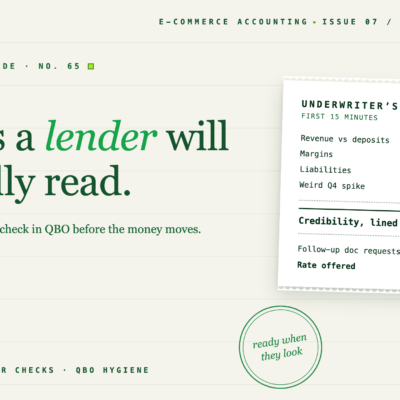
Mga Kinakailangan sa Pautang sa Negosyong Ecommerce: Ang Mga Libro na Sinusuri ng mga Nagpapautang
Magpatuloy sa Pagbabasa →: Mga Kinakailangan sa Pautang sa Negosyong Ecommerce: Ang Mga Libro na Sinusuri ng mga NagpapautangAng bawat pinagmulan ng kapital ay sumusuporta sa ibang bahagi ng iyong mga tala — data ng platform, mga tax return, AR aging, o ang iyong raw bank feed. Narito kung ano ang bawat isa ay talagang sinusuri, ang tatlong failure mode na pumapatay sa mga aplikasyon, at ang 90-araw na cleanup runway.
-
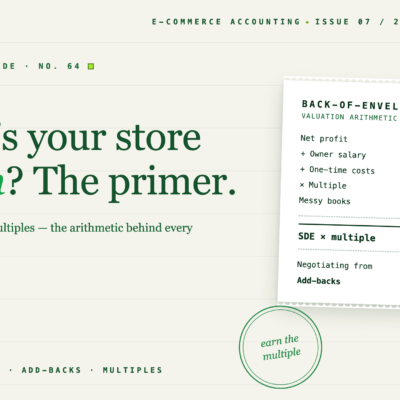
Magkano ang Halaga ng Aking Ecommerce Store? SDE, Add-Backs, Multiples
Magpatuloy sa Pagbabasa →: Magkano ang Halaga ng Aking Ecommerce Store? SDE, Add-Backs, MultiplesAng mga pagpapahalaga sa tindahan ay hindi isang numero na iyong hinahanap — ang mga ito ay SDE na pinarami ng isang saklaw na iyong naiimpluwensyahan. Narito kung paano nabubuo ang SDE, kung aling mga add-back ang nakakaligtas sa accountant ng isang mamimili, at kung bakit ang parehong tindahan ay maaaring magkaroon ng dalawang magkaibang presyo.
-
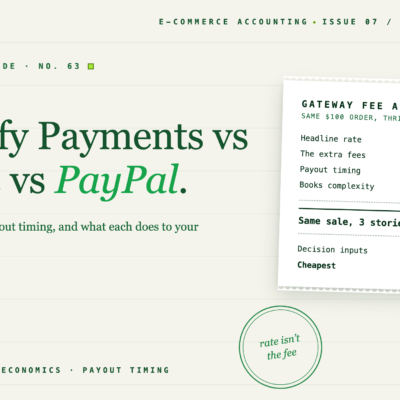
Shopify Payments vs Stripe vs PayPal: Mga Bayarin at Accounting
Magpatuloy sa Pagbabasa →: Shopify Payments vs Stripe vs PayPal: Mga Bayarin at AccountingAng desisyon sa gateway ay mukhang isang paghahambing ng rate. Ito ay talagang dalawang desisyon — kung ano ang sinisingil ng bawat processor, at kung ano ang ginagawa ng bawat isa sa iyong mga libro. Narito ang pareho, sa katapatan.
-
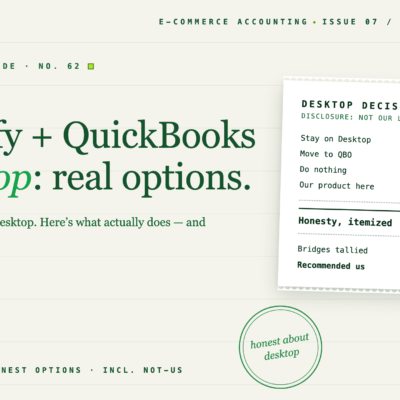
Shopify + QuickBooks Desktop: Ang Iyong mga Tunay na Opsyon sa 2026
Magpatuloy sa Pagbasa →: Shopify + QuickBooks Desktop: Ang Iyong mga Tunay na Opsyon sa 2026Ang pagkonekta ng Shopify sa QuickBooks Desktop ay may kaunting tunay na mga opsyon — Webgility, manual imports, o paglipat sa Online. Narito ang tapat na mapa, mula sa isang vendor na hindi sumusuporta sa Desktop.
-
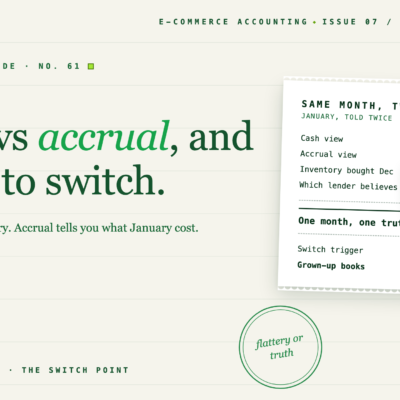
Cash vs Accrual Accounting para sa Ecommerce: Kailan Lilipat
Magpatuloy sa Pagbasa →: Cash vs Accrual Accounting para sa Ecommerce: Kailan Dapat LumipatAng mga aklat na batay sa cash ay nagsasabi sa mga negosyong may imbentaryo ng isang kuwentong hindi totoo. Narito ang isang kathang-isip na buwan na ipinakita sa dalawang paraan — $6,000 na tubo sa isang batayan, $27,500 sa isa pa — at kung kailan hindi na opsyonal ang paglipat.
-
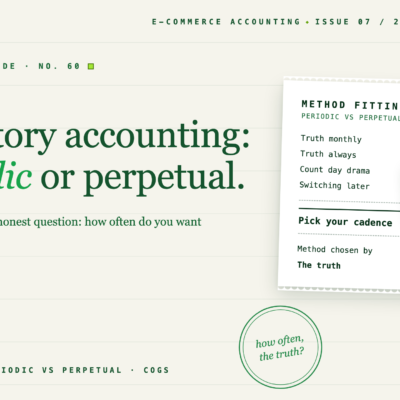
E-commerce Inventory Accounting: Periodic vs Perpetual
Magpatuloy sa Pagbasa →: E-commerce Inventory Accounting: Periodic vs PerpetualAlam ng Shopify kung ilang yunit ang mayroon ka. Kailangang malaman ng iyong mga aklat kung magkano ang halaga ng mga ito. Narito kung paano talaga gumagana ang dalawang sistema ng accounting ng imbentaryo — periodic at perpetual — para sa isang online store, at alin ang babagay sa iyo.
-
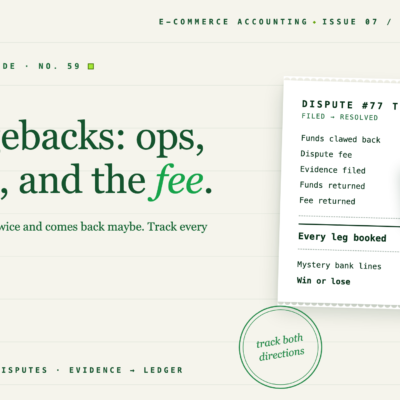
Chargeback Accounting: Mga Dispute Mula Unang Email Hanggang Huling Entry
Magpatuloy sa Pagbabasa →: Chargeback Accounting: Mga Dispute Mula Unang Email Hanggang Huling EntryKinukuha muna ng bangko ang pera at pagkatapos ay nagtatanong. Narito ang buong lifecycle ng dispute — at ang mga entry na nagpapanatiling tapat ng iyong mga libro, manalo ka man o matalo.
-
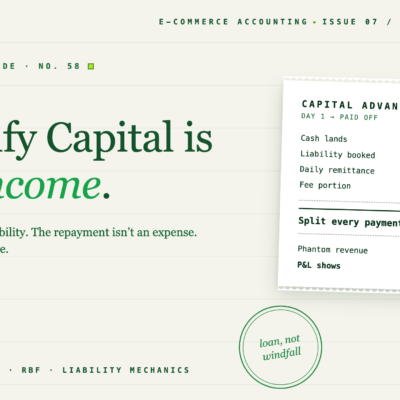
Shopify Capital Accounting: Bakit Hindi Gastos ang Pagbabayad
Magpatuloy sa Pagbabasa →: Shopify Capital Accounting: Bakit Hindi Gastos ang PagbabayadAng advance ng Shopify Capital ay hindi kita, at ang mga remittance ay hindi gastos. Narito ang mechanics ng pananagutan, ang setup ng QuickBooks, at ang patibong na nagpapalagay sa mga funded store na bumagsak ang kanilang mga benta.
-
BNPL Accounting: Shop Pay Installments, Klarna & Afterpay
Magpatuloy sa Pagbabasa →: BNPL Accounting: Shop Pay Installments, Klarna & AfterpayAng mga order ng BNPL ay nagbabayad sa iyo nang maaga, minus ang mas malaking bayarin na nakatago sa ibang report. Paano i-book nang tama ang Shop Pay Installments, Klarna, at Afterpay sa QuickBooks.
-
Tax-Exempt Sales Bookkeeping: Mga Sertipiko & Malinis na Libro
Magpatuloy sa Pagbabasa →: Tax-Exempt Sales Bookkeeping: Mga Sertipiko & Malinis na LibroSinasabi ng isang wholesale buyer na sila ay tax-exempt at itinigil mo ang pag-charge ng buwis — ngunit ang exemption ay pagmamay-ari ng isang sertipiko, hindi ng isang customer. Narito ang disiplina sa papeles at ang istraktura ng bookkeeping na nagpapanatiling depensibo ang mga zero-tax na order.
I-automate ang Iyong E-commerce Accounting Ngayon
Pataasin ang halaga ng bawat benta gamit ang automated bookkeeping na mahirap palampasin.
Subukan ang LedgerPort nang Libre