

- 1Почему второй звонок для выяснения деталей происходит снова и снова
- 2Опросник для приема клиентов в сфере электронной коммерции: по разделам
- 3Раздел 1: Платформы и каналы продаж
- 4Раздел 2: Платежные шлюзы и периодичность выплат
- 5Раздел 3: Объемы и сезонные диапазоны
- 6Раздел 4: Состояние файла QuickBooks
- 7Раздел 5: Налоговая позиция
- 8Раздел 6: Чек-лист доступа и учетных данных
- 9Что меняет каждый ответ
- 10Как использовать: Отправить, Просмотреть, Подтвердить
- 11Избавьтесь от второго звонка для выяснения деталей
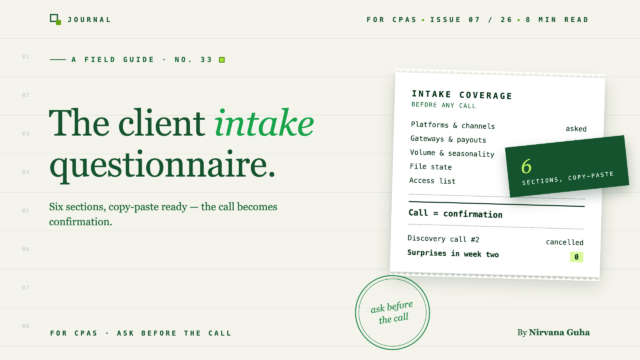
Опросник для приема клиентов в сфере электронной коммерции, который превращает звонки для выяснения деталей в звонки для подтверждения — шесть разделов, каждый вопрос готов к копированию.
Вы проводите второй звонок для выяснения деталей с тем же потенциальным клиентом. Первый прошел хорошо — хороший контакт, четкая проблема, магазин Shopify с солидным оборотом, интегрированный с QuickBooks Online. Вы подготовили предложение в тот же вечер.
Затем пришло ответное письмо: «Ой — имеет ли значение, что мы также продаем на Etsy? И прошлой весной мы добавили Afterpay». Имеет. Etsy — это второй канал со своими комиссиями и депозитами; Afterpay — это платежный шлюз со своим графиком выплат, поступающий на тот же банковский счет. Ваш объем работ, план инструментов и цена были рассчитаны на основе картины, в которой отсутствовали два ключевых факта. Итак, вы здесь, на втором звонке, снова выясняете детали.
Большинство фирм реагируют, пытаясь улучшить качество звонков для выяснения деталей — более четкие вопросы, более длительные звонки, партнер на линии. Это основано на лжи, которую стоит назвать: хороший звонок для выяснения деталей выявляет все. Это не так, и не может быть так, потому что клиенты не сообщают факты, которые, по их мнению, не имеют значения. Никто не упоминает Afterpay своему бухгалтеру без напоминания — это просто способ оплаты клиентов.
Вот правда, которая решает эту проблему: клиент в сфере электронной коммерции — это не открытая тайна. Существует набор известных, конечных фактов для приема — платформы, платежные шлюзы, каналы, диапазоны объемов, организационно-правовая форма и налоговая позиция, состояние файла, список доступа — и письменный опросник для приема клиентов в сфере электронной коммерции собирает 90% из них до того, как кто-либо начнет разговор. Этот пост — тот самый опросник, разбитый на шесть разделов, каждый вопрос готов к вставке в вашу форму приема или предконтактное письмо.
Почему второй звонок для выяснения деталей происходит снова и снова
Звонок для выяснения деталей — это импровизация. Вы задаете вопросы, которые помните, клиент отвечает на то, что считает релевантным, а все, до чего ни вы, ни он не дотянулись, остается невидимым до тех пор, пока что-то не сломается — обычно предложение, иногда договор.
Письменный опрос инвертирует это. Клиент отвечает самостоятельно, с открытым администратором Shopify и выписками из банка — проверяя, а не вспоминая. «В скольких штатах вы зарегистрированы?» получит реальный ответ из портала подачи документов, а не «хм, в нескольких?» из памяти.
И поскольку набор фактов конечен, опросник не должен быть хитрым — он должен быть полным. Шесть разделов охватывают все. Это расширенная версия предконтактного письма на этапе 1 процесса адаптации за 55 минут, отправляемая до того, как вы даже оценили объем работ.
Опросник для приема клиентов в сфере электронной коммерции: по разделам
Отправьте все шесть разделов одним документом. Каждый вопрос ниже написан так, чтобы его можно было скопировать как есть.
Раздел 1: Платформы и каналы продаж
Вопрос по Etsy, заданный до того, как он потребует переписывать ваше предложение.
- На каких платформах вы сейчас продаете? (Shopify, WooCommerce, Amazon, Etsy, eBay, Walmart, TikTok Shop, другие)
- Перечислите URL всех магазинов — включая неактивные, но имевшие исторические продажи.
- Продаете ли вы оптом или B2B на условиях, отличных от вашего интернет-магазина?
- Вы продаете лично — POS, рынки, всплывающие окна, розничная точка?
- Есть ли у вас товары по подписке или с регулярным доходом?
- Добавляли ли вы или закрывали ли какие-либо каналы продаж за последние 24 месяца?
Последний вопрос касается канала, который был закрыт в марте, но его история все еще должна быть учтена.
Раздел 2: Платежные шлюзы и периодичность выплат
Каждый платежный шлюз — это отдельный поток поступлений, который нужно сверять. Пропустите один, и банковская выписка в конечном итоге укажет на это, с дополнительными расходами на исправление.
- Какие платежные процессоры вы используете? (Shopify Payments, PayPal, Stripe, Amazon Pay, другие)
- Предлагаете ли вы опцию «купи сейчас — плати потом»? (Afterpay, Klarna, Affirm, Shop Pay Installments)
- Для каждого шлюза: как часто он осуществляет выплаты — ежедневно, еженедельно, ежемесячно?
- На какой(ие) банковский(ие) счет(а) поступают выплаты? Один счет или несколько?
- Удерживают ли какие-либо шлюзы резерв или оборотный остаток?
- Продаете ли вы подарочные карты или кредиты магазина, или принимаете их?
Раздел 3: Объемы и сезонные диапазоны
Диапазоны, а не точные цифры — клиент сможет ответить за тридцать секунд, а для оценки нужны только диапазоны.
- Заказов в месяц, примерно: менее 100 / 100–500 / 500–2 000 / 2 000–5 000 / более 5 000
- Диапазон годовой выручки: менее 250 тыс. $ / 250 тыс. $–1 млн $ / 1 млн $–5 млн $ / более 5 млн $
- Сколько у вас SKU: менее 50 / 50–500 / более 500
- Какая доля годовой выручки приходится на ваш самый прибыльный квартал и какие это месяцы?
- Примерно какой процент заказов заканчивается возвратом или отменой?
- Продаете ли вы в валютах, отличных от USD, или осуществляете международные поставки?
Раздел 4: Состояние файла QuickBooks
Этот раздел определяет, цитируете ли вы стоимость только за настройку или за настройку плюс исправление — самое дорогое, что можно обнаружить поздно.
- Используете ли вы QuickBooks Online или QuickBooks Desktop? Какой уровень подписки?
- Кто вел бухгалтерию и как долго? (Вы, бухгалтер, предыдущая фирма, никто)
- За какой последний месяц были сверрены каждый банковский счет?
- Как данные вашего магазина сейчас попадают в QuickBooks? (Приложение для синхронизации, импорт CSV, ручной ввод, только банковская выписка)
- Какие приложения для синхронизации установлены сейчас — и какие были установлены ранее, даже ненадолго?
- Есть ли в вашей учетной схеме транзитный счет для выплат? Знаете ли вы его текущий баланс?
Ответы здесь напрямую влияют на диагностику файла Shopify-QuickBooks — запустите ее перед тем, как делать предложение, потому что файл с удвоенным доходом или остатками отмененного приложения для синхронизации — это задача по очистке, которая оценивается ируется отдельно, а не сюрприз, который поглощается первым месяцем.
Раздел 5: Налоговая позиция
Не налоговая консультация при приеме — инвентаризация. Вы определяете, что существует, и, что критически важно, кто за это отвечает.
- Какой у вас тип организации и когда заканчивается ваш финансовый год?
- В каких штатах вы зарегистрированы для уплаты налога с продаж? Перечислите их все.
- Кто сегодня подает декларации по налогу с продаж — ваша будущая фирма, вы или сервис вроде Avalara или TaxJar?
- Как часто подаются декларации в каждом штате — ежемесячно, ежеквартально, ежегодно?
- Вы занимаетесь расчетом заработной платы? Вы выдаете 1099 подрядчикам?
- Как вы сегодня учитываете запасы и себестоимость проданных товаров, если вообще учитываете?
- Поданы ли декларации за предыдущие годы и актуальны ли они, и кто их готовил?
Выделенный жирным шрифтом вопрос — это замаскированный вопрос об объеме работ. «Клиент подает» и «фирма подает» — это разные договоры, и предположение одного, в то время как клиент предполагает другое, — это то, как налог с продаж становится ничьей работой на два квартала.
Раздел 6: Чек-лист доступа и учетных данных
Последний раздел — это не вопросы, а запросы. Отправьте его в виде контрольного списка, который клиент просматривает перед звонком, чтобы звонок не был потрачен на наблюдение за тем, как кто-то сбрасывает пароль. Золотое правило: сначала только для чтения. Запросите доступ на уровне отчетности везде, где он существует, и переходите к администратору только тогда, когда работа этого требует.
- Отправьте приглашение QuickBooks Online для бухгалтеров на наш логин фирмы (не общий пароль).
- Предоставьте Shopify доступ в качестве сотрудника нашей фирме — и доступ персонала на любой другой платформе, на которой вы продаете.
- Предоставьте доступ к отчетности или только для чтения каждому платежному шлюзу (панели Stripe, PayPal, BNPL).
- Предоставьте доступ к банковским счетам только для чтения или последние 12 месяцев выписок по каждому счету, который получает выплаты.
- Поделитесь доступом к вашим порталам(ам) для подачи налоговых деклараций, если вы подаете их самостоятельно.
- Подтвердите, что мы можем связаться с вашим предыдущим бухгалтером или bookkeeping-специалистом, и поделитесь их данными.
Что меняет каждый ответ
Ответ при приеме, на который вы не действуете, — это просто информация. Вот соответствие ответа и задачи:
| Ответ | Что это меняет |
|---|---|
| Более одной платформы или магазина | Объем работ и инструменты — вам нужна консолидация нескольких магазинов, а не один коннектор, и цена договора указывается за канал |
| BNPL или несколько шлюзов | Клиринговый счет для каждого шлюза и шаг сверки для каждого потока выплат — оценивайте ежемесячную работу соответственно |
| Самый высокий объем (5000+ заказов/мес) | Ручные методы и методы через CSV исключены; инструменты синхронизации и их уровень теперь являются отдельной статьей в предложении |
| Высокая сезонность | Объем ошибок и нагрузка поддержки возрастают в пиковые месяцы — установите ожидания и штат сейчас, а не в ноябре |
| QuickBooks Desktop | Обсуждение миграции перед всем остальным — большинство инструментов синхронизации, включая LedgerPort, работают только онлайн |
| Несверстанные месяцы или предыдущее приложение для синхронизации | Сначала отдельное обязательство по очистке; онбординг в сломанный файл автоматизирует беспорядок |
| Несколько зарегистрированных штатов, клиентские файлы | Консультативное ограничение, которое следует указать в письме о намерениях — письменно, в первый день |
| Подарочные карты или кредит магазина | Решение о политике учета обязательств на этапе сопоставления, потому что проданные подарочные карты не являются доходом |
Каждая строка — это решение о масштабе, цене или инструментах — в этом и заключается проверка хорошего вопроса для приема: если бы ни один ответ не изменил обязательство, уберите его.
Как использовать: Отправить, Просмотреть, Подтвердить
Рабочий процесс состоит из трех шагов.
Отправьте его вместе с материалами вашего предложения. Анкета отправляется до звонка вместе с обзором вашего обязательства, честно сформулированным: «Вот как мы гарантируем, что наше предложение будет точным с первого раза». Серьезные потенциальные клиенты заполняют ее; те, кто не будет, говорят вам кое-что о том, как будут проходить запросы документов в марте.
Просмотрите ее перед звонком. Пятнадцать минут с заполненной формой, и вы знаете платформы, шлюзы, диапазон объемов, риски файлов и налоговые обязательства. Запустите диагностику файла, если раздел 4 вызвал опасения. Составьте план. Это новый чек-лист для клиентов электронной коммерции, который ваша бухгалтерская команда использует для каждого потенциального клиента — те же шесть разделов, каждый раз, без ошибок для младшего персонала.
Пусть звонок будет подтверждением, а не исследованием. Вы начинаете с: «Вы работаете на Shopify и Etsy, используете Afterpay и Shopify Payments, около 2000 заказов в месяц, зарегистрированы в шести штатах и сами подаете налоговую декларацию — я что-нибудь упустил?» Клиент слышит фирму, которая уже понимает их бизнес. Звонок тратит время на суждения — объем, сроки, обсуждение очистки — вместо инвентаризации.
Это переосмысление — вся выгода. Факты всегда можно было собрать на бумаге; анкета для приема клиентов по бухгалтерскому учету просто собирает их там, где их можно проверить, а не угадать. И если вы создаете электронную коммерцию как постоянную линейку услуг, а не как эксперимент для каждого клиента, эта анкета — парадная дверь: инструмент приема, который позволяет каждому обязательству начинаться с одной и той же полной картины.
Избавьтесь от второго звонка для выяснения деталей
Звонок по поводу Etsy и Afterpay из начала этого поста не происходит в фирмах, которые используют письменный прием. Оба факта содержались в разделах 1 и 2, на которые клиент ответил за кухонным столом за неделю до того, как кто-либо что-либо запланировал.
Скопируйте шесть разделов в свою анкету на этой неделе. Затем, когда вернется первая заполненная анкета, запланируйте звонок по онбордингу CPA — мы вместе с вами разберем ответы, сопоставим их с объемом и инструментами и проведем клиента от заполненного приема до первого сверстанного платежа вместе с вами.