

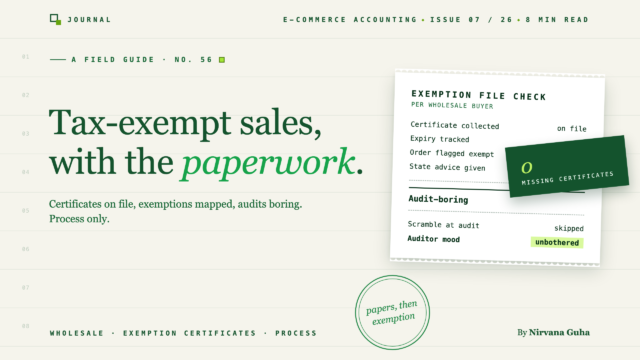
免税销售中危险的部分不是税款缺失——而是文件缺失。零税订单只需点击一下;证明该点击有效需要您事先收集的证书。
电子邮件随附一份丰厚的采购订单:“我们是转售商,所以我们免税——请从我们的订单中取消销售税。”您打开客户的个人资料,找到免税复选框,点击它,然后发货。一切照旧。
如果您从事批发业务,您可能已经做过类似的事情——针对一个或二十个账户。令人不安的问题是当时没有人问的:证明该买家有权免税购买的文件在哪里?如果您的诚实答案是“一封他们这样说的电子邮件”——或者仅仅是“他们看起来很正规”——那么您就承担着账簿上未显示的负债。
这篇文章就是关于这个差距的。不是州与州之间的税收规则——那些因司法管辖区而异,并且该对话应与您的税务专业人士进行。我们可以涵盖的是普遍相同的部分:为什么批发买家通常免税,零税任何人的操作义务,以及免税销售簿记应该是什么样子,以便您账簿中的免税订单是一个有据可查的决定,而不是一个充满希望的决定。
批发买家通常免税的原因:转售理念
销售税旨在只在最终零售销售时征收一次——即商品到达实际使用它们的人手中的那一刻。
批发买家不是那个人。当一家精品店订购您 200 支蜡烛时,他们不是在消费蜡烛;他们是在储备库存以转售。向他们收取税款,然后再让他们向其零售客户收取税款,将对同一商品征收两次税。因此,该系统免除了链条中间环节的税收:转售商免税购买,当商品最终零售时才征收税款。
这就是“转售豁免”背后的概念,这也是为什么“批发”和“免税”经常一起出现。也存在其他豁免类型——一些组织因不同原因符合条件——但对于增加 B2B 销售的商店来说,转售是您会经常遇到的。
对您的图书而言,关键在于:免税必须得到证明。买家是真正的转售商并不能保护您。保护您的是有效的转售或免税证明——买家自行注册并承担责任,证明购买符合资格的文件。哪个证明、在哪里签发、涵盖什么:这些细节因司法管辖区而异,因此请咨询您的税务专业人士,确认您情况下的要求。操作规则完全不变。
谎言:“他们说他们是免税的”
几乎所有批发商都倾向于相信一个听起来合理且令人舒适的说法:“他们是真实的企业——他们告诉我们他们是免税的,这是他们的责任,不是我们的。”
它在一点结构性事实上失败了:当您不收税就进行销售时,您是那个未收款的人。证明是将责任转移给买家——如果您有一份有效的证明并善意地保留,买家的声明就是买家的问题。没有证明,审计员通常有权将销售视为应税,并且评估将落在您身上:未收取的税款,加上罚款和利息,针对审计窗口中的每一笔无证免税销售。您的买家没有义务在多年后向您报销,而且其中一些买家将不复存在。
因此,操作职责非常明确,并且一句话概括了整个纪律:在对任何人免税之前收集有效的证明,并按照您的税务专业人士告诉您的时间尽可能长地保留它。无法证明的免税不是免税。它是一张写有您名字的未缴税单。
这一切都不会让买家成为您的敌人。合法的转售商通常会携带这些证明,并期望被询问。当您询问时保持沉默的人正在告诉您一些有用的信息。
证书卫生:收集、存储、跟踪、续订
将证明视为您应得的财务文件,而不是要存档并遗忘的入职文件。四个习惯涵盖了这一点:
- 在第一笔免税订单之前收集。将证明作为您批发入职流程中的一个环节——申请获批、收到并审核证明、然后设置免税标志。收到时进行合理性检查:完整、签名、企业名称与账户匹配、注册号存在。字段空白的表格保护不了任何人。
- 将其存储在订单数据所在的位置。您无法提供的证明可能就等于不存在。将数字副本附加到客户记录(或从中链接),以便在几分钟内即可追溯到其文件——而不是在某人已离职的笔记本电脑的文件夹中。
- 跟踪到期日期。有些证明是永久有效的;有些则会过期或需要定期续订——具体取决于司法管辖区,这是您需要咨询税务专业人士的问题。您的工作是操作部分:为每个证明记录一个审核日期,并将续订添加到日历中。一张已过期十八个月的证明会悄悄地将此后的每笔订单变成无证免税销售。
- 注意每张证书的适用范围。 证书并非通用通行证——其有效性可能取决于买家注册地和销售发生地,如果您向多个州进行批发销售,覆盖一项关系的证书可能无法覆盖另一项。请咨询您的税务专业人士,了解您的证书在哪些地方有效、哪些地方无效,并据此进行收集。
所有四种情况背后的模式:审计师在免税销售方面的第一步是抽样检查,并要求提供每笔交易背后的证书。良好的卫生习惯意味着这项要求变得枯燥乏味。
免税销售簿记:免税订单在您的账簿中应是什么样子
现在来看账簿本身——因为“正确免税”的订单和“根本没有税”的订单之间存在差异,您的账簿应该能够区分它们。
零税行不等于缺少税设置。 正确记录的免税销售会显示其税额明确为零——订单已通过您的税务逻辑处理并应用了免税。完全没有税务处理的订单在发票上看起来相同,但含义完全不同:没有人做出决定。如果您的账簿无法区分“有文件证明的免税”和“意外未征税”,那么审查它们的人也无法区分。将销售税从收入中分离并计入负债账户的一般方法在我们的电子商务会计指南中有介绍;免税销售是该路由的一个分支,而不是跳过它的借口。
将免税收入与应税收入分开。 将免税批发销售作为独立的类别显示——一个单独的收入账户、一个类别,或者至少是一个报告“应税销售”和“免税销售”为每个时期不同数字的标签约定。有两个原因。首先,销售税申报通常要求提供总销售额以及免税或扣除的销售额,而不仅仅是已收取的税款——如果您的账簿无法生成此细分,那么在每次申报期,有人就需要从订单导出中重新构建它。其次,这是您的预警系统:如果免税收入占销售额的 40%,但您的证书仅覆盖价值 25% 的账户,那么这个差距在审计师发现之前就可见了。
一个简短的虚构例子。三月份的销售额为 80,000 美元:零售 62,000 美元(已税,已收取的税款存放在负债账户中)和批发 18,000 美元给四个免税账户。干净的账簿显示 18,000 美元为免税收入,每个账户都可追溯到存档的证书,以及与已税的 62,000 美元相符的税款负债——这三个数字相互印证。只显示 80,000 美元收入和一些已收税款的账簿则什么也显示不出来。
如果这些批发订单也采用净 30 天付款方式——大多数都是如此——那么我们净额条款会计指南中的发票和应收账款结构是正确记录它们的另一半。这种细分正是会计师宁愿在 10 月份找到而不是在 1 月份重新构建的内容——这是我们税务季节准备指南中一个反复出现的 12 月份问题。
平台标记是收集,不是合规
两大平台都为此提供了开关。Shopify 允许您在客户个人资料中将其标记为免税,这样结账时就不会再计算其订单的税款。WooCommerce 通过客户税务设置实现了相同的功能,而批发插件(包括 Wholesale Suite)则将免税处理功能内置于批发角色本身,因此经过批准的企业对企业客户可以自动地以不同于 零售购物者 的价格和税率进行购买。值得明确的是,这个开关能为您带来什么,因为它区分了本节的重点:批发角色决定是否计算税款,而不是豁免是否可辩护。Wholesale Suite 关于 为批发客户免税 的操作指南也划定了同样的界限——标记是简单的一半,存档的证书是能够通过审计的一半。
使用这些标志;它们是正确的机制。只需清楚它们是什么:该标志控制是否收取税款。它不知道您是否有权不收费——没有复选框会要求提供证书、检查有效期或代表您进行任何申报。在收到证书后设置标志,在证书过期且未续订时取消设置。没有文件支持的免税标志就是前面提到的谎言,是自动化且大规模运行的。
审计:一家仅凭信任就零税的商店
一个虚构的商店,使用整数,使暴露具体化。
Harbor Trade Goods 在第一年就增加了批发业务,并且效果很好:两年内有 14 个 B2B 客户,在他们提到自己是转售商的任何时候,都会被设置为免税。有两人主动发送了证书;另外十二人通过电子邮件和良好的意愿“处理”了。批发业务的年收入增长到约 150,000 美元,全部零税,全部记入与所有其他业务相同的收入账户。
然后是一次例行的销售税审计。审计员提取了免税销售额——很容易发现,它们是没有税款的订单——进行了抽样检查,并要求提供每笔销售背后的证书。Harbor 提供了两个。对于其余的,审计员做了规则允许的一切:将无证件的免税销售视为应税。在审计窗口期内,近 250,000 美元的无证批发额,按约 8% 的税率计算,评估金额约为 20,000 美元——这还不包括罚款和利息。Harbor 匆忙地追溯收集证书;一些买家配合了,两家公司已经倒闭了,而且迟交的证书是否会被接受完全是一场谈判,而不是一项权利。(一些司法管辖区允许在审计开始后有一个补救期;有些则不允许。永远不要指望它——是的,请与您的税务专业人士确认,因为它确实因地而异。)
Harbor 被评估的税款本不该由 Harbor 支付。他们的买家是真正的转售商;免税几乎肯定是合法的。Harbor 所支付的是十二份纸质文件的缺失——纯粹是流程失败,每份缺失的文件成本超过 1,500 美元。
您的同步设置在哪里发挥作用
最后还有一个技术层面,因为免税订单不仅需要被正确批准——它们还需要正确入账,每次都与同一家商店中流转的应税零售订单并列。
如果您的订单自动从 Shopify 或 WooCommerce 同步到 QuickBooks,请检查同步如何处理税务,以及批发订单是否可以与零售订单不同地过账。在 LedgerPort — 我们的产品,因此请相应权衡 — 税务处理位于 同步配置中:已收取的税款将作为单独一行过账到您指定的负债账户,并且带有税务处理的订单在没有匹配的配置错误的情况下会暂停而不是基于猜测进行过账。免税订单的过账税款明确为零 — 这是一个已记录的决定,而不是缺失。来自 订单同步方法的基于标签的路由可以使批发订单继续作为发票过账,而零售订单则像以前一样流动 — 处理净账期问题的相同路由也可以处理这个问题。
无论您使用什么工具,标准都是相同的:应税和免税收入可区分,税款在负债账户中,没有任何基于猜测的过账。
十二份丢失的文件使虚构的 Harbor Trade Goods 公司损失了约 20,000 美元 — 这是他们本不应缴纳的税款。辩护并不复杂:在复选框之前提供证书,存放在您可以找到的地方,进行跟踪以防过期,并确保账簿将免税收入作为其自身的准确数字显示。文书工作背后的规则属于您的税务专业人士。文书工作本身属于您,而且在丢失之前它一直都很便宜。
如果您的批发订单无论如何都要进入 QuickBooks,请确保它们以实际的税务处理方式进行记录:了解同步级别的税务处理如何正确过账免税和应税订单 → — 或者免费连接您的商店,并为您的下一个免税订单在两端都提供纸质记录。