

- 1Ang Kinakailangan: Ang Isang Pinangalanang Niche ay Mas Mahusay na Nagko-convert sa Bawat Channel
- 2Channel 1: Mga Referral — Engineered, Hindi Inaasahan
- 3Channel 2: Mga Komunidad ng Platform — Ang Tuntunin ng Pagtulong Muna
- 4Channel 3: Mga Direktoryo at Marketplace ng Tool-Partner
- 5Channel 4: Niche na Nilalaman sa Sariling Site ng Kumpanya
- 6Channel 5: Ang Mga BOFU Front Door — Pagtulong at Paglilinis
- 7Paano Hindi Makakuha ng E-commerce Accounting Clients
- 8Ang Hugis ng Buong Sistema
Paano makakuha ng mga kliyente sa accounting para sa ecommerce, sa totoo lang: bawat channel na nagbubunga ay isang trust channel. Ang trabaho ay ang pag-engineer ng tiwala — hindi ang pagbili ng listahan.
Walong buwan na ang nakalipas, nagpasya ang iyong kumpanya na ang e-commerce ang magiging susi sa paglago. Nagkaroon ng bagong pahina ang website — "Nagsisilbi kami sa mga online seller." May sumali sa isang LinkedIn group sa kumpanya. Binanggit ito ng isang partner sa isang chamber lunch. Marahil ay nagbayad ka pa para sa isang listahan ng mga mangangalakal sa Shopify sa iyong estado at nagpadala ng isang daang maingat na email.
Ang pipeline ngayon: isang referral na dumating sa paraan kung paano palaging dumating ang mga referral, at isang tugon sa cold email na nagsabing "unsubscribe."
Kung ganyan ang iyong huling dalawang quarter, ang diagnosis ay hindi pagsisikap. Ito ay dahil nagpatakbo ka ng isang visibility play para sa kung ano ang sa esensya ay isang pagbili ng tiwala. Walang nagbibigay ng kanilang mga libro — ang bagay na binabasa ng IRS, ang bagay na binabasa ng bangko — sa isang kumpanya dahil may lumitaw na email. Ang kasinungalingan na patuloy na binibili ng mga kumpanya, sa isang anyo o iba pa, ay na ang pagkuha ng mga kliyente ay isang problema sa pag-abot: makipag-ugnayan sa sapat na mga may-ari ng tindahan at ang ilang porsyento ay magko-convert. Hindi ito nangyayari, dahil ang pag-abot nang walang tiwala ay nagko-convert sa humigit-kumulang zero para sa mga serbisyo sa accounting.
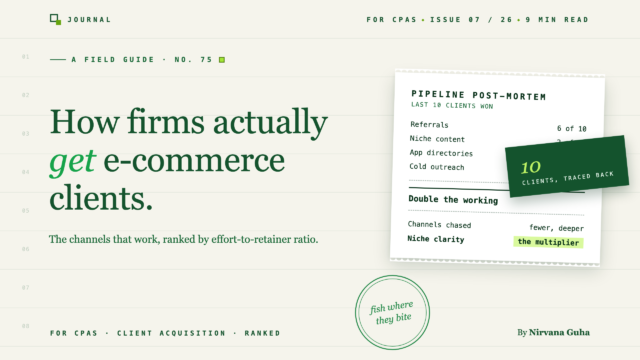
Magtanong sa mga kumpanya na talagang bumuo ng mga kasanayan sa e-commerce at maririnig mo ang parehong limang channel nang paulit-ulit — lumalabas na ito ay isang maikling listahan. Wala sa mga ito ang matalino. Lahat sila ay nagpapatong-patong. At ang bawat isa sa kanila ay nagko-convert nang mas dramatikong mas mahusay kapag nagawa mo na ang isang piraso ng positioning work muna.
Ang post na ito ay para lamang sa demand side. Ang delivery side — ang chart template, ang sync layer, ang onboarding runsheet na kailangan mo bago mo ma-serve ang mga kliyenteng ito nang kumikita — ay sakop sa paano magdagdag ng mga kliyente sa e-commerce bilang isang service line. Buuin pareho; nabibigo sila nang hiwalay.
Ang Kinakailangan: Ang Isang Pinangalanang Niche ay Mas Mahusay na Nagko-convert sa Bawat Channel
Bago ang anumang channel, isang desisyon: sabihin kung ano ang iyong ginagawa, nang makitid, sa publiko.
Ang "Full-service accounting para sa maliliit na negosyo" ay walang maibibigay sa isang referrer na uulitin at walang makikilala ang isang may-ari ng tindahan. Ang "Ginagawa namin ang mga libro para sa Shopify at WooCommerce — reconciliation ng payout, buwis sa benta, mga financial na may kamalayan sa imbentaryo" ay isang pangungusap na maaaring ilipat ng isang abogado nang eksakto, isang miyembro ng Facebook group ay maaaring i-screenshot, at isang may-ari ng tindahan mula sa tatlong estado ang malayo ay maaaring mahanap.
Hindi ito isang kagandahang pang-branding. Binabago nito ang matematika sa lahat ng nasa ibaba. Ang pinagmulan ng referral na may tiyak na pangungusap ay mas marami ang naisasangguni, dahil alam nila kung saang mga usapan sila nabibilang. Ang sagot mula sa komunidad mula sa "accountant ng Shopify" ay mas mabigat kaysa sa parehong sagot mula sa isang generalist. Ang listahan ng direktoryo na may nakasaad na espesyalidad ay na-click; ang generic ay nilaktawan. At ang pag-frame ng espesyalista ang nagpapahintulot sa iyo na maningil nang maayos para sa trabaho — ang kaso ng margin ay nakalatag sa kung bakit mukhang hindi kumikita ang mga kliyente sa e-commerce, at hindi naman talaga.
Tumututol ang mga kumpanya dito dahil ang pagpapaliit ay parang pagtanggi sa kita. Sa katotohanan, ang pagpoposisyon bilang generalist ay hindi naman talaga nananalo sa trabaho sa e-commerce — nilalabo lang nito ang bawat channel na iyong pinapatakbo. Pangalanan muna ang niche. Lahat ng nasa ibaba ay ipinapalagay na mayroon ka na.
Channel 1: Mga Referral — Engineered, Hindi Inaasahan
Ang mga referral ay ang iyong pinakamahusay na channel. Ang problema ay karamihan sa mga kumpanya ay pinapatakbo ito tulad ng panahon: isang bagay na nangyayari sa kumpanya, sa anumang rate na mangyari ito.
Ang mga engineered referral ay may dalawang bahagi.
Ang script ng paghingi. Passive: "pinahahalagahan namin ang mga referral." Engineered: isang tiyak na pangungusap, na ibinibigay sa mga tiyak na tao, na nagsasabi sa kanila kung ano mismo ang ipapadala sa iyo. Isang bagay tulad ng — "Bumuo kami ng espesyalidad sa e-commerce: mga nagbebenta ng Shopify at WooCommerce sa QuickBooks, karaniwang kumikita ng $500K hanggang $5M. Kung makakakilala ka ng may-ari ng tindahan na magulo ang mga libro o ang kanilang accountant ay hindi nauunawaan ang platform, iyon mismo ang gusto naming makausap." Sabihin ito sa iyong sampung pinakamahusay na kasalukuyang kliyente, isang beses bawat isa, sa isang totoong pag-uusap. Karamihan sa mga kumpanya ay hindi pa ito nagawa kahit isang beses. Ang pagiging tiyak ang buong mekanismo: ang "may kilala ka bang nangangailangan ng accountant?" ay walang naibibigay dahil hinihiling nito sa nakikinig na gawin ang pagtutugma. Ang isang tumpak na paglalarawan ay ginagawa ang pagtutugma para sa kanila.
Ang loop kasama ang mga komplementaryong propesyonal. Mayroon nang mga tagapayo ang mga may-ari ng tindahan na nakikita ang kanilang mga problema sa pananalapi bago mo pa man: mga abogado ng negosyo na humahawak sa kanilang mga gawaing pang-entidad, mga broker ng M&A at website na nagbubukas ng mga libro ng isang nagbebenta sa panahon ng masusing pagsisiyasat at napapangiwi, at ang mga ahensya ng pagpapaunlad at marketing ng Shopify na nasa admin ng tindahan bawat linggo. Ang bawat isa sa mga propesyonal na iyon ay regular na tinatanong ng "may kilala ka bang magaling na accountant para dito?" — at karamihan ay walang magandang sagot para sa e-commerce partikular.
Buuin ang loop nang sadyang: tukuyin ang dalawa o tatlo sa bawat isa sa iyong merkado o sa ecosystem ng iyong platform, at gawin itong reciprocal. Patuloy kang makakakilala ng mga kliyente na nangangailangan ng abogado ng negosyo, broker, o ahensya; magpadala ng trabaho sa kanila, at maging malinaw na ikaw ang sagot sa kanilang tanong sa accounting ng e-commerce. Ang mga broker ang natatago dito — ang isang nagbebenta na naghahanda na umalis ay nangangailangan ng malinis na mga libro kaagad, at ang broker ay sabik na mag-refer dahil ang mga magulong pinansyal ay pumapatay din sa kanilang mga deal.
Takdang panahon: ang script ng paghingi ay maaaring makabuo ng referral sa loob ng ilang linggo. Ang professional loop ay nangangailangan ng dalawa o tatlong paulit-ulit na palitan bago ito tumakbo nang mag-isa — tawagin itong anim na buwan para maging maaasahan.
Channel 2: Mga Komunidad ng Platform — Ang Tuntunin ng Pagtulong Muna
Nagtitipon ang mga may-ari ng tindahan ng Shopify at WooCommerce sa iilang lugar: mga Facebook group na partikular sa platform, mga subreddit tulad ng r/shopify at r/ecommerce, at ang sariling mga forum ng komunidad ng mga platform. Ang mga tanong sa accounting ay lumalabas sa lahat ng mga ito, palagi — "bakit hindi tugma ang aking payout sa aking deposito," "paano ko haharapin ang sales tax sa QuickBooks," "hindi nauunawaan ng aking accountant ang Shopify, normal ba iyon."
Ang channel ay gumagana sa isang kondisyon lamang: una kang tumutulong, ganap, nang walang anumang pagbebenta. Sagutin ang tanong sa payout ng aktwal na sagot — ang istraktura ng gross-to-net, kung saan nakatago ang mga bayarin, kung ano ang hitsura ng pag-aayos — hindi ng "ito ay kumplikado, i-DM mo ako." Gawin ito sa ilalim ng iyong tunay na pangalan kasama ang iyong kumpanya sa iyong profile, at gawin ito nang tuluy-tuloy.
Dalawang tapat na babala. Una, karamihan sa mga grupo ay ipinagbabawal ang pangangalap nang direkta, at ang mga miyembro ay mahusay sa pagkilala ng mga nakatagong pagbebenta; isang promotional post ay maaaring makasira sa channel. Pangalawa, mahaba ang panahon. Bumubuo ka ng pagkilala, hindi nagbubuo ng mga lead — asahan ang tatlo hanggang anim na buwan ng tuluy-tuloy, tunay na kapaki-pakinabang na mga sagot bago ang unang DM na nagsisimula ng "mukhang alam mo ang mga bagay na ito, kumukuha ka ba ng mga kliyente?" Ang mga kumpanyang itinuturing ito bilang isang lead-gen sprint ay sumusuko sa ikaanim na linggo at nagpapasya na hindi ito gumagana. Ang mga kumpanyang itinuturing ito bilang isang oras bawat linggo ng propesyonal na presensya ay natatagpuan, pagkatapos ng isang taon, na ito ay isang tuluy-tuloy na mapagkukunan ng eksaktong-tamang-fit na mga kliyente na dumarating na pre-sold.
Channel 3: Mga Direktoryo at Marketplace ng Tool-Partner
Ang bawat piraso ng software na ginagamit ng isang may-ari ng tindahan upang patakbuhin ang kanilang mga libro ay nagpapanatili ng ilang uri ng direktoryo ng partner o advisor — ang QuickBooks ay mayroong ProAdvisor listing nito, at ang mga sync tool, tax app, at inventory platform sa e-commerce accounting stack ay karaniwang nagpapatakbo ng mga accountant partner program na may sariling mga pampublikong direktoryo.
Ang mga listahang ito ay naglalagay sa iyo sa harap ng isang tiyak at mahalagang sandali: isang may-ari ng tindahan na aktibong inaayos ang kanilang mga libro. Walang nagba-browse ng direktoryo ng partner ng accounting-app para sa kasiyahan. Ang taong nagbabasa nito ay kakatapos lang mag-install o sinusuri ang isang tool, kinilala ang problema, at naghahanap ng isang propesyonal na alam na ang software na kanilang pinili. Iyon ang pinakamainit na malamig na audience na mahahanap mo kahit saan.
Ang makatotohanang mga inaasahan: ang isang listahan ay hindi isang pipeline. Ang trapiko sa direktoryo ay isang patak, at ang mga generic na listahan ay nilalaktawan. Ang nagpapatakbo nito ay ang niche positioning mula sa mas maaga — isang profile na nagsasabing "e-commerce, Shopify/WooCommerce, QuickBooks, payout reconciliation" ay nakakakuha ng click mula sa eksaktong may-ari ng tindahan na gusto mo, habang ang "full-service firm, est. 1994" ay hindi. Maglista sa lahat ng dako kung saan nag-o-overlap ang iyong aktwal na stack, panatilihing tiyak ang mga profile, at ituring ang channel bilang isang compounding background presence: halos walang pagsisikap pagkatapos ng setup, paminsan-minsang mga kliyente nang walang hanggan.
Channel 4: Niche na Nilalaman sa Sariling Site ng Kumpanya
Ang nilalaman ay gumagana para sa mga kumpanya sa parehong paraan na ito ay gumagana para sa sinuman: magmay-ari ng isang tanong, mahanap ng mga taong nagtatanong nito. Ang bersyon ng kumpanya ay mas makitid at mas madaling mapanalunan kaysa sa inaakala ng karamihan sa mga kasosyo.
Hindi ka nagsisimula ng isang blog. Isinusulat mo ang anim hanggang sampung pahina na sumasagot sa mga tanong na tina-type ng iyong ideal client sa Google ng 11 ng gabi: bakit hindi tugma ang kanilang Shopify payout sa kanilang bank deposit, paano gumagana ang sales tax kapag nagbebenta sila sa ibang mga estado, ano ang hitsura ng malinis na mga libro bago ibenta ang isang tindahan, magkano talaga ang gastos sa isang e-commerce accountant. Ito ay mga long-tail na tanong na may katamtamang volume ng paghahanap at — maliban sa mga software company na nagsusulat para sa buong bansa — napakakaunti ng kumpetisyon mula sa mga aktwal na kumpanya, lalo na sa anumang lokal o platform-specific na anggulo.
Ang matematika ng tapat na pagsisikap: ang isang tunay na magandang pahina ay nangangailangan ng ilang oras upang isulat ng isang practitioner, at mabagal itong magra-rank — asahan ang labindalawa hanggang labingwalong buwan bago ang isang pahina ay mapagkakatiwalaang makagawa ng mga inquiry. Iyon ang tunay na time scale, at anumang shortcut na bersyon (manipis na AI boilerplate, limang daang salita ng pangkalahatan) ay hindi gumagawa ng anuman, dahil ang may-ari ng tindahan na nagbabasa nito ay agad na masasabi kung ang may-akda ay tunay na nag-reconcile ng isang payout. Magsulat mula sa iyong mga engagement. Ang pahina na naglalarawan ng eksaktong gulo na iyong nilinis noong nakaraang quarter, at kung paano, ay ang pahina na nagko-convert — dahil ang mambabasa ay nakaupo sa loob ng parehong gulo.
Anim hanggang sampung malakas na pahina, na isinulat sa loob ng isang taon, ay isang matibay na asset na gumagana habang ikaw ay natutulog. Ito rin ang pinakamabagal na channel sa listahang ito. Simulan ito nang maaga eksakto dahil doon.
Channel 5: Ang Mga BOFU Front Door — Pagtulong at Paglilinis
Ang pinakamataas na intensyon sa isang taon ng isang may-ari ng tindahan ay kapag may nasusunog na. Dalawang sunog partikular ang nagdadala ng mga kliyente sa pinto.
Pagsagip sa panahon ng buwis. Bawat Pebrero hanggang Abril, isang alon ng mga may-ari ng tindahan ang nakatuklas na ang kanilang mga libro ay hindi makagawa ng return — umalis ang preparer, hindi tugma ang mga numero, ang extension ay biglang hindi opsyonal. Ang mga kumpanya na malinaw na nag-aalok ng e-commerce rescue work sa panahong iyon ("nahuhuli sa iyong mga libro sa Shopify? Ginagawa namin ang pag-catch-up") ay kumukuha ng mga kliyente sa eksaktong sandali na ang pagiging sensitibo sa presyo ay pinakamababa at ang pagka-apurahan ay pinakamataas. Ang rescue engagement ay bihirang kumita sa sarili nito; ang halaga nito ay ang kliyente na nakaligtas sa panahon ng buwis kasama mo ay bihirang umalis.
Mga engagement sa paglilinis at diagnostic. Ang isang sira na QuickBooks file ay isang pintuan sa harap na maaari mong lagyan ng doorknob. Ang pag-aalok ng fixed-scope, fixed-fee diagnostic — isang structured review ng file ng kliyente na nagsasabi sa kanila kung ano mismo ang mali at kung magkano ang gastos sa pag-aayos nito — ay nagko-convert ng mga nagdududang prospect dahil ito ay isang maliit, nakapirming unang pagbili sa halip na isang panukot ng kasal. Nag-publish kami ng 30-minutong file diagnostic na maaari mong patakbuhin bilang engagement na iyon, at isang buong framework para sa pag-scope at pagpepresyo ng mga cleanup engagement upang ang mismong rescue work ay kumikita sa halip na isang loss leader na kinaiinisan mo.
Ang pattern sa pareho: hindi ka lumilikha ng demand, nagpoposisyon ka sa sandaling ang demand ay tumataas nang kusa. Pinakamurang marketing na mayroon.
Paano Hindi Makakuha ng E-commerce Accounting Clients
Dalawang channel ang kumakain ng enerhiya ng kumpanya at mapagkakatiwalaang walang nagagawa, at sulit na maging prangka tungkol sa mga ito.
Malamig na pakikipag-ugnayan sa laki ng kumpanya. Ang malamig na email ay maaaring gumana para sa mga produkto na ibinebenta sa ekonomiya ng volume — libu-libong pagpapadala, bahagyang mga rate ng tugon, mga pagbili na mababa ang tiwala. Ang isang kumpanya ay walang alinman sa mga kondisyong iyon. Hindi ka maaaring magpadala ng libu-libong email nang hindi sinisira ang reputasyon ng iyong domain, ang iyong serbisyo ay hindi mabibili sa bugso, at ang kakulangan sa tiwala ng isang hindi hinihinging email ay eksaktong mali para sa isang pagbili na binubuo ng tiwala. Ang paminsan-minsang ahensya ay magbebenta sa iyo ng isang "tapos-na-para-sa-iyo na outbound" na programa. Ang matematika ay hindi nakakaligtas sa pakikipag-ugnayan sa kung ano talaga ang mga kliyente sa accounting.
Mga biniling listahan. Ang isang listahan ng "mga merchant ng Shopify sa iyong rehiyon" ay hindi nagsasabi sa iyo ng anuman tungkol sa kung mayroon silang accountant, kinamumuhian ang kanilang accountant, o ginagawa ang kanilang mga libro sa isang spreadsheet nang may pagmamalaki. Nagbabayad ka para sa ilusyon ng isang pipeline. Ang parehong pera ay bumibili ng isang taon ng mga listahan ng direktoryo at ang oras ng komunidad na katumbas ng isang propesyonal — mga channel kung saan ang intensyon ay lumalapit sa iyo.
Ang Hugis ng Buong Sistema
Pansinin ang pattern sa lahat ng gumagana: mga referral, komunidad, direktoryo, nilalaman, mga sandali ng pagliligtas — bawat isa ay humihiram ng tiwala mula sa isang tao na mayroon nito o lumilitaw sa isang sandali kung kailan ang pangangailangan ng prospect ay nakahihigit sa kanilang pag-iingat. Wala sa listahan ang gumagawa ng demand mula sa wala, at walang gumagana nang walang nakalistang niche na ginagawang malinaw ka.
Pagkasunod-sunod nito nang makatotohanan: ang script ng hiling ngayong linggo, ang alok ng diagnostic ngayong buwan, mga direktoryo ngayong quarter, presensya sa komunidad bilang isang nakatayong ugali, nilalaman bilang mabagal na nagbubuo ng layer sa ilalim. Kasabay nito, siguraduhing handa ang sistema ng paghahatid mula sa playbook ng service-line na naka-link sa itaas — dahil ang pinakamalupit na bersyon ng pagtatrabaho nito ay isang pipeline ng mga kliyente ng e-commerce na dumarating sa isang kumpanya na hindi pa sila kayang pagsilbihan nang kumikita.
At kapag dumating ang mga kliyente, ang bahagi ng paghahanda ng mga kasangkapan sa pagsisilbi sa kanila sa laki ng kumpanya — ang bawat tindahan ng kliyente ay naka-sync sa sarili nitong QuickBooks file sa ilalim ng isang login — ay kung para saan ang pag-setup ng kumpanya ng LedgerPort.