

- 1Ang Tahimik na Desisyon na Karamihan sa mga Firm ay Nagawa Na
- 2Bakit Bumagsak ang Kakayahang Kumita ng E-Commerce Accounting Firm
- 3Anatomiya ng isang Masamang Shopify Engagement
- 4Ano ang Hitsura ng Shopify Accounting para sa mga CPA Kapag Naka-systemize
- 5Ang Oportunidad sa Pagpepresyo na Nakatago sa Halatang Lugar
- 6Ang Mga Kliyente na Iniiwasan Mo
Ang kakayahang kumita ng e-commerce accounting firm ay mukhang problema sa uri ng kliyente. Hindi ito — at ang mga firm na nakatuklas niyan ay naniningil ng premium para sa eksaktong trabaho na iniiwasan mo.
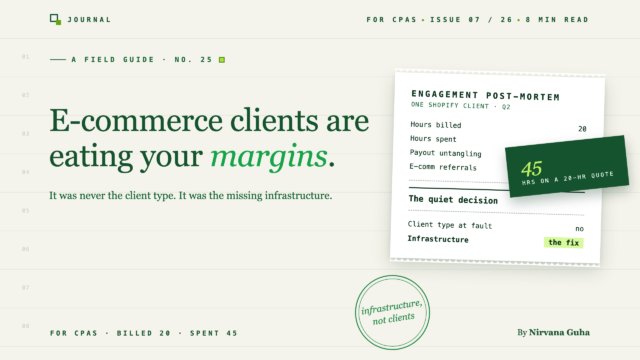
Sa isang lugar sa kamakailang kasaysayan ng iyong firm ay may isang engagement na hindi mo masyadong pinag-uusapan. Isang Shopify store, marahil isang WooCommerce shop na may naka-bolt na Stripe account. In-quote mo ito tulad ng isang normal na maliit na negosyong kliyente. Nag-bill ka ng 20 oras. Gumastos ka ng 45.
Hindi tumugma ang mga payout sa mga deposito sa bangko. Nakatago ang mga bayarin sa loob ng net disbursements. Ang nakaraang bookkeeper ay nag-post ng mga payout bilang kita, kaya kailangan ng rework ang file bago magsimula ang tunay na trabaho. Nang dumating ang susunod na e-commerce referral, nakahanap ka ng magalang na paraan para tanggihan.
Kung halos ganyan ang iyong kuwento, ang post na ito ay tungkol sa konklusyon na nakuha mo mula rito — dahil ang konklusyon, hindi ang engagement, ang nagpapamahal sa iyo. Ang kita sa mga kliyenteng ito ay hindi itinakda ng uri ng kliyente. Ito ay itinakda ng imprastraktura na karamihan sa mga firm ay hindi pa naitatayo. Ang mga firm na nakapagtayo nito ay naniningil ng mas malaki para sa parehong trabaho at tinatapos ito nang mas mabilis.
Ang Tahimik na Desisyon na Karamihan sa mga Firm ay Nagawa Na
Walang nag-aanunsyo ng "hindi kami tumatanggap ng mga e-commerce client." Nangyayari ito nang tahimik. Ang Shopify referral ay nakakakuha ng mabagal na tugon. Ang discovery call ay nagpapakita ng "limitasyon sa kapasidad." Nakalista sa website ng firm ang mga industriyang pinagsisilbihan, at ang online retail ay hindi isa sa mga ito.
Ang pangangatwiran sa likod ng tahimik na desisyong iyon ay karaniwang sinasabi bilang batas ng kalikasan: ang mga e-commerce client ay likas na mababa ang kita. Iyan ang kalikasan ng trabaho. Mas mabuting mag-specialize sa isang mas malinis na lugar.
Iyan ang kasinungalingan — at sulit na maging tiyak tungkol sa kung bakit ito ay kasinungalingan sa halip na mali lang. Ito ay kasinungalingan dahil kumukuha ito ng totoong obserbasyon (ang engagement na ito ay nalugi) at naglalakip ng maling sanhi (ang uri ng kliyente). Ang accounting sa e-commerce ay hindi mas kumplikado kaysa sa isang restaurant na may tatlong sentro ng kita o isang kontratista na may retainage. Kita, bayarin, refund, mga pananagutan — mas mahirap pa ang iyong nahawakan.
Ang naiiba ay ang data infrastructure sa ilalim ng accounting. At iyan ay isang problemang malulutas, hindi isang fixed cost ng niche.
Bakit Bumagsak ang Kakayahang Kumita ng E-Commerce Accounting Firm
Tatlong istruktural na dahilan kung bakit lumolobo ang oras — wala sa mga ito ang tungkol sa kakayahan ng iyong koponan.
1. Nakatago ang ledger sa istraktura ng payout. Nagdedeposito ang Shopify ng mga netong halaga: kabuuang benta bawasan ng mga refund, bawasan ng mga processing fee, bawasan ng mga adjustment, minsan ay sumasaklaw sa mga bahagi ng dalawang buwan. Gusto ng QuickBooks ng kabuuang kita na may mga bayarin at refund na hiwalay. Iyon ay dalawang magkaibang wika, at ang bawat payout ay isang pagsasanay sa pagsasalin. Ginawa nang mano-mano, ang isang payout ay maaaring tumagal ng 20–30 minuto upang ma-decompose — at ang isang katamtamang laki ng tindahan ay bumubuo ng dose-dosenang bawat buwan.
2. Walang dalawang kliyente ang magkapareho ng stack. Ang isang kliyente ay gumagamit lamang ng Shopify Payments. Ang susunod ay tumatanggap ng Shopify Payments, PayPal, at Afterpay. Ang pangatlo ay nagbebenta sa Shopify at Amazon at nagse-settle sa pamamagitan ng pareho. Ang bawat gateway ay may sariling logic ng bayarin, timing ng settlement, at format ng pag-uulat. Ang workflow na ginawa mo para sa kliyente isa ay naililipat lamang marahil 40% sa kliyente dalawa.
3. Walang nagte-templatize. Ito ang talagang pumapatay sa margin. Ang matatag na ekonomiya ay nakasalalay sa pagiging paulit-ulit — ang ikasampung kliyente ng payroll ay mas mura kaysa sa una dahil ang proseso ay standardized. Kapag ang bawat e-commerce client ay isang bespoke reconciliation puzzle, hindi mo kailanman makukuha ang benepisyo ng learning-curve. Ang ika-45 na oras sa iyong pangatlong Shopify client ay parang ika-45 na oras sa iyong una.
Pagsamahin ang mga iyon at ang mga write-off ay hindi malas. Ang mga ito ay ang inaasahang output ng pagpapatakbo ng mga custom na pakikipag-ugnayan sa isang business model na may presyo para sa mga paulit-ulit.
Anatomiya ng isang Masamang Shopify Engagement
Patakbuhin ang post-mortem sa pakikipag-ugnayang iyon nang tapat at may lumilitaw na pattern. Gumamit ng mga bilog na numero: nag-quote ka ng buwanang close sa 8 oras batay sa laki ng kita ng kliyente. Narito kung saan napunta ang totoong oras.
| Gawain | In-quote | Aktwal |
|---|---|---|
| Pagkategorya ng Transaksyon | 2 oras | 3 oras |
| Pag-reconcile ng Payout | 2 oras | 9 oras |
| Paghihiwalay ng Bayarin at Refund | 1 oras | 4 na oras |
| Pagsisiyasat sa mga Hindi Pagtutugma | 1 oras | 5 oras |
| Pag-uulat at Pagsusuri | 2 oras | 2 oras |
| Kabuuang | 8 oras | 23 oras |
Pansinin kung ano ang hindi lumampas: ang aktwal na accounting. Ang pagkategorya ay lumampas ng 50% — normal para sa isang bagong kliyente. Ang pag-uulat ay natapos ayon sa quote. Ang mga paglampas ay nakakonsentra lamang sa layer ng pagsasalin: pagkuha ng maruming data ng platform sa isang estado kung saan ang accounting ay maaaring mangyari.
Hindi mo mali ang pagtantiya sa accounting. Nag-quote ka para sa nakikitang trabaho at nagmana ng isang hindi nakikitang proyekto sa data-plumbing. Bawat firm na nasunog ay gumawa ng parehong makatwiran, hindi kumpletong diagnosis — na siyang dahilan kung bakit ang solusyon ay hindi "mag-quote ng triple at umasa," ito ay ang pag-alis ng proyekto sa plumbing mula sa pakikipag-ugnayan.
Ano ang Hitsura ng Shopify Accounting para sa mga CPA Kapag Naka-systemize
Ang mga kumpanyang nananalo kasama ang mga kliyente sa e-commerce — ang mga bumubuo ng buong kasanayan sa paligid nila — ay hindi nag-hire ng mas mabilis na staff. Gumawa sila ng isang structural na taya: ituring ang accounting ng e-commerce bilang isang paulit-ulit na daloy ng trabaho, at itulak ang translation layer pababa sa software. Ang pagpili ng software layer na iyon ay sarili nitong desisyon — ang aming pag-ikot ng pinakamahusay na Shopify accounting software ay naghahambing ng mga seryosong kakumpitensya — ngunit ang hugis ng sistema ay pareho anuman ang tool na pipiliin mo.
Sa kongkreto, ang sistema ay may tatlong bahagi.
Isang configuration, inilapat sa lahat ng dako. Sa halip na magdisenyo ng chart of accounts mapping ng bawat kliyente mula sa simula, ang mga sistematikong kumpanya ay ginagawa itong pamantayan. Ito mismo ang ginawa ng CPA Partner Program ng LedgerPort: ang Master Template ay nagbibigay-daan sa iyo na ilapat ang standard chart of accounts configuration ng iyong kumpanya sa mga kliyente, kaya ang kliyente anim ay nagmamana ng mga desisyon na ginawa mo para sa kliyente isa. Magdagdag ng hierarchical client management — ang aktibidad ng sync at configuration ng bawat kliyente ay nakikita mula sa isang solong pag-login ng kumpanya — at ang wholesale billing na hinahawakan sa antas ng kumpanya, at ang problemang "bespoke engagement" ay nagsisimulang matunaw sa isang portfolio na iyong pinamamahalaan. Ang programa ay nagpapatakbo rin ng white-glove onboarding: ang koponan ng LedgerPort ay nagkokonekta sa tindahan at QuickBooks file ng bawat kliyente, nagse-set up ng mga mapping, at nagbe-verify ng mga unang sync na nagre-reconcile bago ibalik ang kliyente sa iyo.
Mga kliyente bilang mga switchable workspace, hindi hiwalay na mga login. Sa praktika, ang pamamahala ng portfolio ay ganito ang hitsura: ang bawat kliyente ay isang Negosyo sa LedgerPort — isang tindahan na ipinares sa isang QuickBooks Online na kumpanya, ganap na nakahiwalay sa iba. I-click mo ang pangalan ng negosyo sa itaas-kaliwa ng dashboard, ang switcher ay naglilista ng bawat kliyente sa account, at i-click mo ang kailangan mo — ang mga koneksyon nito, sync logs, at mga setting ay naglo-load nang hindi nagla-log out sa anumang bagay. Ang pagdaragdag ng bagong kliyente ay ang parehong menu: Magdagdag ng Negosyo, pangalanan ito, itakda ang pera at timezone, ikonekta ang tindahan. (Buong walkthrough: Paano Pamahalaan ang Maramihang Negosyo →) Ang access ng staff ay sumusunod sa parehong lohika — maaari kang mag-imbita ng mga miyembro ng koponan na may mga tungkulin na Admin o Miyembro, kaya ang isang junior ay maaaring magpatakbo ng mga sync at suriin ang mga mapping sa isang file ng kliyente nang hindi nagagawang hawakan ang pagsingil o configuration ng sync.
Reconciliation bilang pagsusuri, hindi pagbuo. Sa mga payout na awtomatikong nahahati — ang gross sales, refunds, fees, at adjustments bawat isa ay napupunta sa tamang account — ang buwanang pagsasara ay nagiging pagsusuri sa trabaho ng makina sa halip na paggawa ng trabaho. Ang 9-oras na reconciliation line sa talahanayan sa itaas ay ang linya na pinakamahirap atakihin ng automation.
Wala sa mga ito ang nag-aalis ng paghuhusga. Mga pamamaraan sa imbentaryo, sales tax nexus, mga tanong sa entity — iyon pa rin ikaw, at iyon ang bahagi na sulit bayaran. Ang sistema ay humihinto lamang sa iyo sa paggastos ng 15 oras sa isang buwan bilang isang tao na CSV parser muna. (Pagkuha ng isang kliyente na ang mga libro ay sira na? Iyon ay sarili nitong playbook — tingnan ang Gabay ng CPA sa Paglilinis ng QuickBooks File ng isang Shopify Client, at ipares ito sa isang pamantayang proseso ng onboarding upang ang paglilinis ay hindi na maulit.)
Ang Oportunidad sa Pagpepresyo na Nakatago sa Halatang Lugar
Narito ang bahagi na hindi kailanman nakikita ng mga "low-margin niche" na tao: ang espesyalisasyon ay lumilikha ng kapangyarihan sa pagpepresyo, at ang mga may-ari ng e-commerce ay hindi karaniwang handang magbayad para dito.
Pag-isipan kung ano ang hitsura ng merkado mula sa pananaw ng may-ari ng tindahan. Karamihan sa mga lokal na kumpanya ay hindi hahawakan ang kanilang mga libro — alam mo kung bakit. Kaya kapag nakakita sila ng isang kumpanya na bihasa sa Shopify, nagbibigay ng kumpiyansang quote, at tinatapos ang kanilang mga libro sa ika-10, ang presyo ay hindi na ang nagiging variable na nagpapasya. Ang mga kumpanyang nag-specialize sa e-commerce ay karaniwang nagpepresyo ng 30–40% na mas mataas kaysa sa mga generalist rate para sa parehong saklaw — hindi dahil mas mahaba ang mga oras, kundi dahil bihira ang kadalubhasaan at ang alternatibo (isang generalist na natututo gamit ang pera ng kliyente) ay mas masama para sa lahat.
Patakbuhin ang kalkulasyon sa isang kliyente. Ang isang generalist firm ay nag-quote ng $1,000/buwan na close, gumugugol ng 23 oras sa paghahatid nito, at kumikita ng humigit-kumulang $43/oras bago ang overhead. Ang isang systemized firm ay nag-quote ng $1,350 para sa parehong close — premium positioning — gumugugol ng 7 oras dito, at kumikita ng humigit-kumulang $190/oras. Parehong kliyente. Parehong deliverable. Ang pagkakaiba ay ang isang firm ay nagbenta ng oras at kinain ang translation layer; ang isa ay nagbenta ng kadalubhasaan at in-automate ito. Ang agwat na iyon din ang dahilan kung bakit ang flat-rate at value pricing ay gumagana nang maayos sa niche na ito — binabasag namin ang mga modelo sa Paano Magpresyo ng Mga Serbisyo sa Accounting sa E-Commerce.
At patuloy na dumarami ang demand side: bawat taon mas maraming retail ang lumilipat online, habang ang supply ng mga firm na mahusay na magsisilbi dito ay nananatiling flat. Ang kakulangan kasama ang pagkaapurahan ay ang pinakamahusay na kapaligiran sa pagpepresyo na maaaring hilingin ng isang firm. Para sa mas malawak na tanawin ng kung ano ang kasama sa mga pakikipag-ugnayang ito, tingnan ang aming kumpletong gabay sa accounting sa e-commerce at kung paano binabago ng automation ang daloy ng trabaho.
Ang Mga Kliyente na Iniiwasan Mo
Kaya narito ang nakakatawang pagtatapos sa pakikipag-ugnayang iyon na hindi mo pinag-uusapan.
Ang aral na nakuha mo mula rito — iwasan ang e-commerce — ay kabaligtaran. Ang pakikipag-ugnayan ay hindi ebidensya na ang mga kliyente sa e-commerce ay mababa ang margin. Ito ay ebidensya na ang mga kliyente sa e-commerce ay maling presyo ng halos lahat ng firm na nagsisilbi sa kanila, dahil halos lahat ng firm ay sumasalo sa isang gastos sa imprastraktura na dapat sana ay sinasalo ng software.
Ang mga kliyenteng iniiwasan mo ay ang pinakamataas na margin na oportunidad sa iyong listahan ng mga potensyal na kliyente. Kailangan mo lang ng ibang mga kasangkapan bago gumana ang matematika.
Kung namamahala ka ng kahit 5 kliyente sa e-commerce — o tinatanggihan mo sila — tingnan kung paano pinapatakbo ng mga firm na tulad mo ang reconciliation layer nang awtomatiko, o simulan ang usapan sa pag-onboard ng partner at ipa-set up ang file ng unang kliyente sa iyo, kasama ang mga mapping, bago ka magkomit sa anumang bagay.