
Category: E-commerce Accounting
Tips and strategies for e-commerce bookkeeping and accounting automation.
-

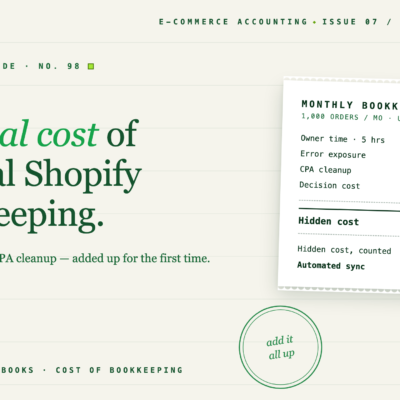
The Real Cost of Manual Shopify Bookkeeping (It’s Not Zero)
Continue Reading →: The Real Cost of Manual Shopify Bookkeeping (It’s Not Zero)Most store owners price their bookkeeping at zero or at the bookkeeper’s invoice. The real number is four line items, and it compounds every month.
-
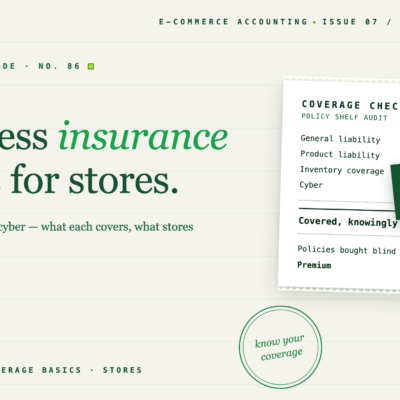
Ecommerce Business Insurance: The Coverage Map for Stores
Continue Reading →: Ecommerce Business Insurance: The Coverage Map for StoresStores don’t buy insurance when a blog says to — they buy it the week a counterparty demands a certificate. Here’s the coverage map: what each policy actually does, the trigger events that tell you when you need it, and…
-
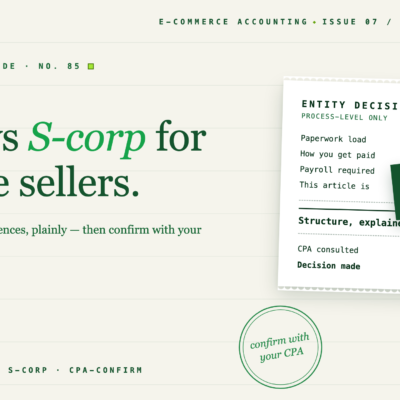
LLC vs S Corp for Ecommerce Sellers: What Actually Changes
Continue Reading →: LLC vs S Corp for Ecommerce Sellers: What Actually ChangesAn LLC is a legal entity. An S corp is a tax election. This post untangles the vocabulary, shows what an election changes in your payroll and your books, and builds the list of questions to bring to your CPA…
-
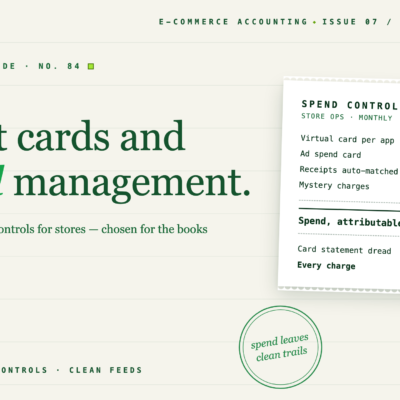
Business Credit Card for Ecommerce Stores: What Matters
Continue Reading →: Business Credit Card for Ecommerce Stores: What MattersCard marketing sells rewards. Your store needs something else: a limit that survives Q4, spend controls that keep vendors contained, and transactions that land in your books already explained. An honest, no-affiliate guide to the card classes and when a…
-
SKU Naming Best Practices & Barcode Hygiene for Scaling Stores
Continue Reading →: SKU Naming Best Practices & Barcode Hygiene for Scaling StoresYour SKU is the join key every system in your business relies on — the platform, the warehouse, the inventory tool, the books. A practical guide to designing a scheme that survives growth, and to fixing a messy one without…
-
BFCM Preparation Checklist: The Finance Side of Peak Season
Continue Reading →: BFCM Preparation Checklist: The Finance Side of Peak SeasonEvery BFCM checklist covers ads and inventory. Almost none cover the books. Here’s the finance prep that decides whether your biggest weekend actually makes you money.
-
Inventory Forecasting Basics for DTC Ecommerce Stores
Continue Reading →: Inventory Forecasting Basics for DTC Ecommerce StoresYou don’t need demand-science software to stop stocking out. Inventory forecasting for a DTC store is five inputs and one piece of arithmetic — here’s the whole method, worked through with real numbers, plus the three ways it predictably fails.
-
Ecommerce Returns Logistics: Your Reverse Fulfillment Options
Continue Reading →: Ecommerce Returns Logistics: Your Reverse Fulfillment OptionsA return isn’t a shipment in reverse — it’s a value-recovery decision. Here are your four processing options, the five disposition paths, and the math for when getting the item back costs more than letting it go.
-
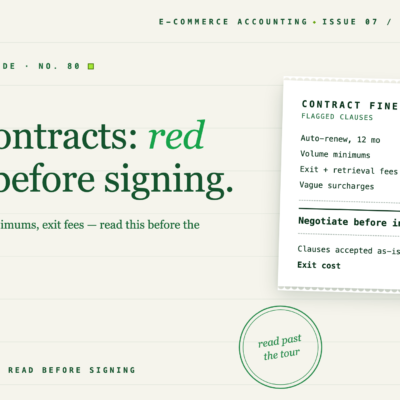
3PL Contract Red Flags: 8 Clauses to Catch Before You Sign
Continue Reading →: 3PL Contract Red Flags: 8 Clauses to Catch Before You SignThe rate card prices a good month. The contract prices the bad ones. Eight clauses that quietly cost stores real money — why each one bites, and what to ask for before you sign.
-
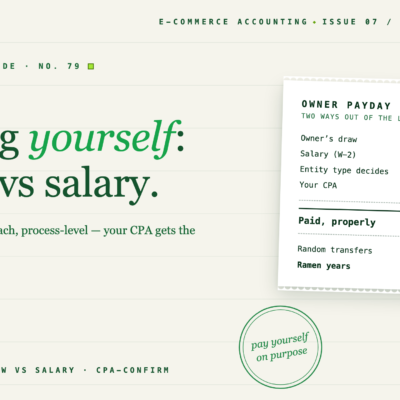
How to Pay Yourself From Your Ecommerce Business: Draw vs Salary
Continue Reading →: How to Pay Yourself From Your Ecommerce Business: Draw vs SalaryOwner’s draw, salary through payroll, distributions — the mechanics of each, what they look like in your books, and why the same cash produces two very different P&Ls. Plus the questions that belong to your CPA.
Automate Your E-commerce Accounting Today
Increase the value of every sale with automated bookkeeping that is hard to miss.
Try LedgerPort for Free